
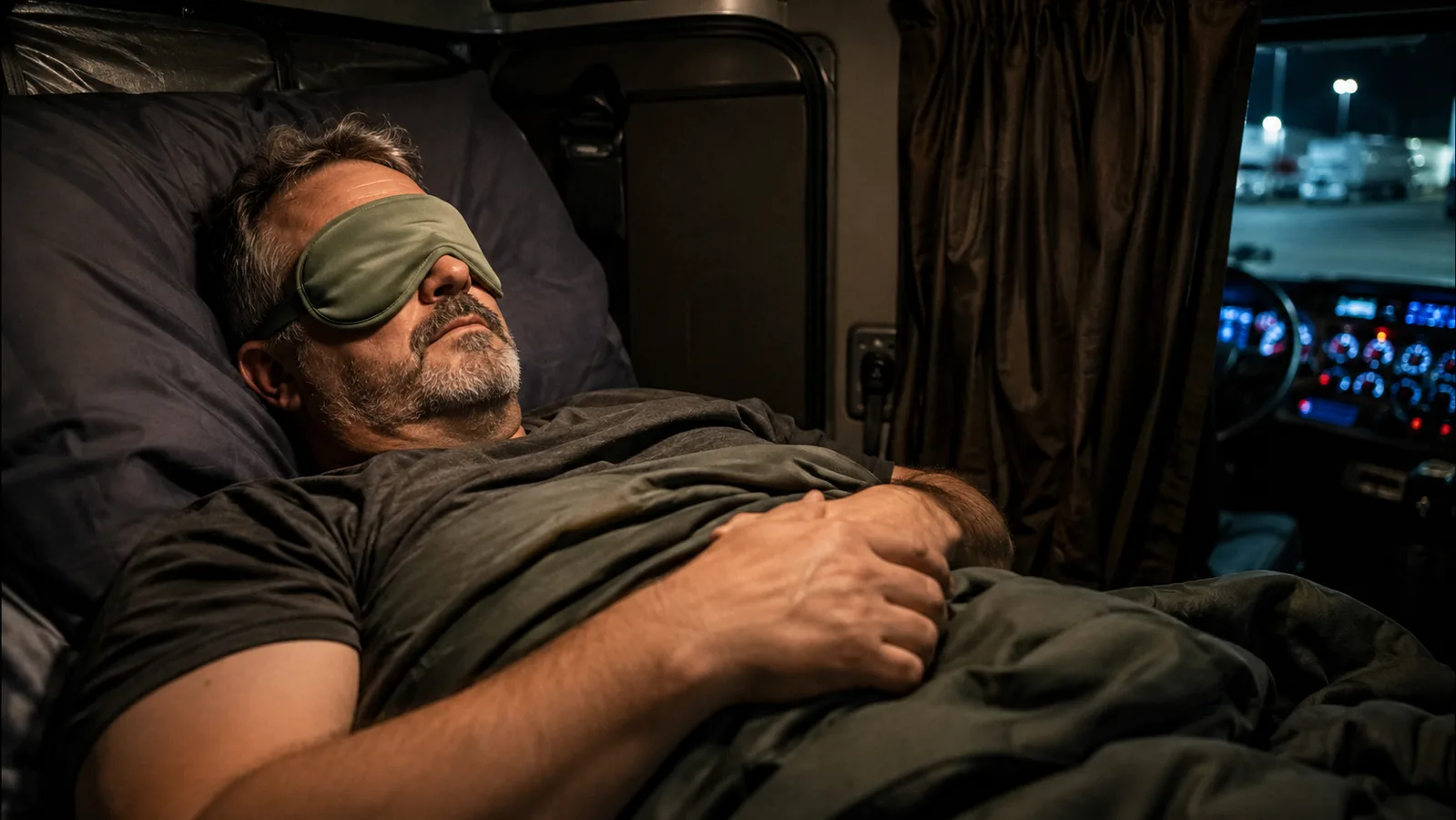
I've slept in more parking lots than most people have slept in beds. Nineteen years driving, and the thing that wrecks a night isn't always the noise, it's the light. Truck stop lots run those pole lights all night, some lot lights are brighter than a gas station canopy, and half the time your curtain has a gap right where your face is. My wife Donna bought me a nodpod weighted sleep mask back in February after I complained for the tenth time about waking up at 3 a.m. with a headache from squinting against light I couldn't get away from. Six months and roughly 140 nights of actual use later, here's the real report, not the marketing version.
I'm not a reviewer by trade. I'm a driver who wanted to see if a mid-priced mask made of memory foam and glass beads was worth packing on top of everything else already crammed into my sleeper cab. Short answer: mostly yes, but it's got a real weak spot I'll get to.
The first night I wore it, I felt silly, not going to lie. Nineteen years of tossing a bandana over my eyes or just gritting through the light, and here's this padded green thing my wife ordered off Amazon that looked more like something you'd wear on a spa day than in a Freightliner cab. But I gave it a real shot instead of throwing it in the glovebox after one bad night, which is what usually happens with gadgets my wife sends along with me. That decision to actually stick with it for six months instead of one week is the only reason this review means anything.
The Quick Verdict
Blocks light better than any blackout curtain gap ever will, but it runs warm on hot nights and the strap needs a real adjustment before it fits right over a bigger head.
Amazon Check Today's Price →Tired of squinting against truck stop lot lights at 2 a.m.?
The nodpod is the only mask I've found that actually stays put when you roll over in a sleeper cab bunk. Check today's price and reviews on Amazon.
Amazon Check Today's Price on Amazon →How I've Used It
I run mostly Southeast and Midwest routes for a regional carrier out of Knoxville, and I sleep in a mix of places: truck stop lots, rest areas, the occasional cheap motel when I'm home-based for a night between loads. That's three different light problems. Truck stops have those tall sodium lights that never fully go away even behind a curtain. Rest areas have headlights sweeping across your window every time someone pulls in at 1 a.m. And motels, the cheap ones anyway, have blackout curtains that are really just heavy drapes with a half-inch gap down the middle where the two panels never quite meet.
I started wearing the nodpod every night in mid-February, both in the truck and at home in Knoxville with Donna, just to get a fair read on it in a normal bed too. I kept a little notebook in my cab door pocket, nothing scientific, just a scribbled note most mornings on how I slept and whether the mask stayed on.
At home, the test looked different. Our bedroom in Knoxville has decent blinds, so light wasn't really the issue there, it was more about seeing if the mask still felt comfortable over a full eight hours without the sleeper cab's cramped space forcing me onto my back the whole night. Donna will tell you I toss around more at home than I ever do in the truck, where there's barely room to roll over anyway. The mask held on through side sleeping and even a few nights where I dozed off sitting up watching a ballgame, which told me more about the strap and fit than any truck stop test could.
By week three I noticed something I hadn't expected. It wasn't just blocking light, the weight of the beads across my eyes and cheekbones was doing something my old bandana-style mask never did. It felt like a light hand resting on my face instead of an elastic strap squeezing my skull. That's the whole pitch behind nodpod's design, and I'll admit I was skeptical, but it held up over six months of actual use, not just the first good night.
The Bead Weight and Contoured Eye Cups, What Actually Matters
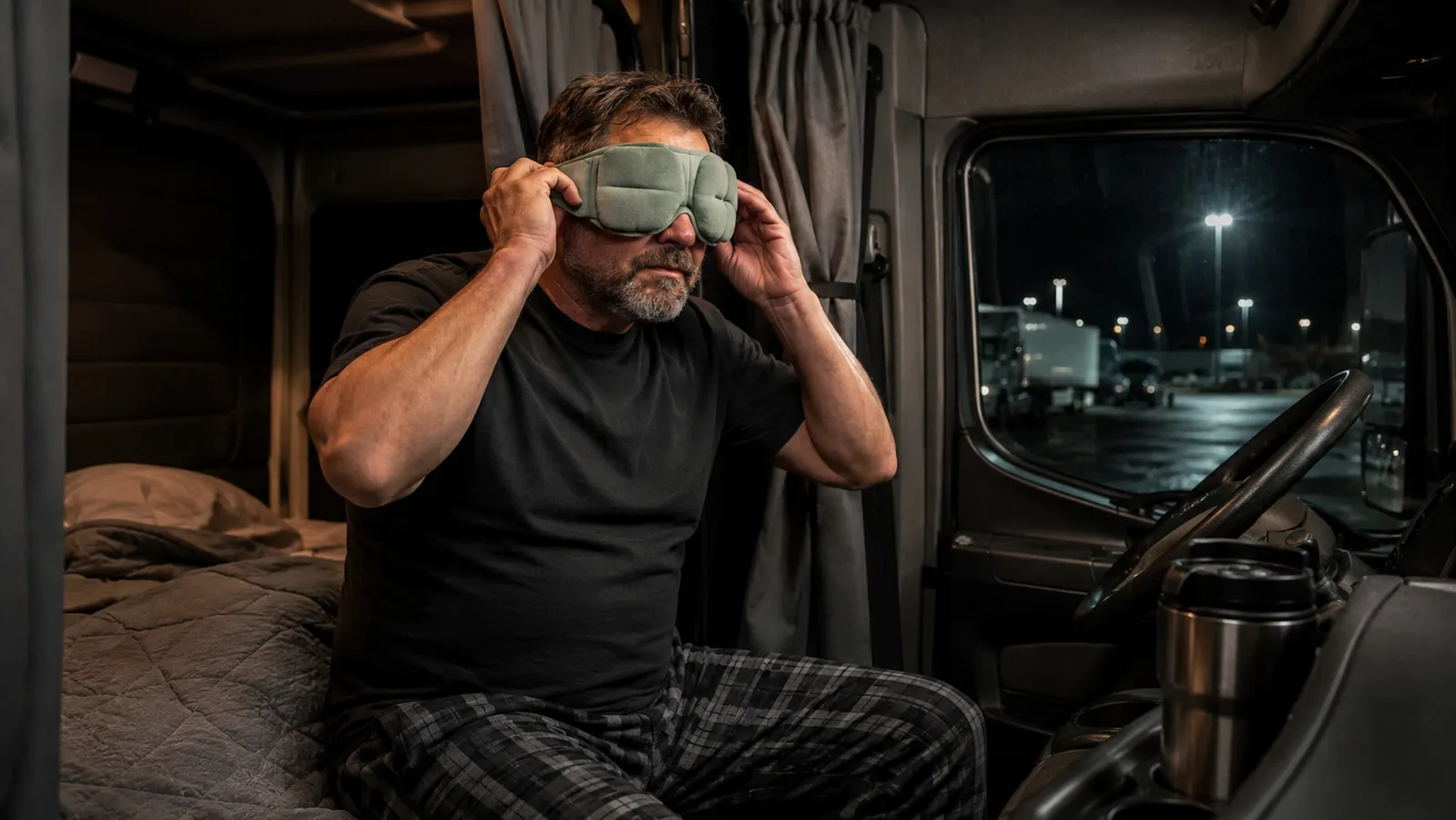
The mask has these two separate eye cups, each with its own little pocket of glass beads sewn in, connected by a soft strap. The eye cups don't touch your eyeballs directly, there's a curved bit of foam that sits on your brow bone and cheek instead, so you can actually blink and even open your eyes a crack inside the mask without your eyelashes brushing fabric. That sounds like a small thing until you've worn a cheap flat mask that presses right down on your eyelids and makes you feel like you're suffocating a little.
The bead weight is what separates this from a regular sleep mask. It's not heavy like a weighted blanket, more like someone laid two fingers gently across your eyelids. On nights when my mind was still chewing on a bad dispatch call or a late delivery, that gentle pressure genuinely helped me settle faster. I'm not going to tell you it's some biological miracle, I think it's mostly that the weight gives your nervous system something to focus on besides the running list of worries in your head.
I also noticed a difference on nights when I was fighting a headache from staring at a windshield in glare all day. The gentle pressure across my brow seemed to ease that specific kind of tension in a way I didn't expect from what's basically a fancy bag of beads. I mentioned this to my regular doctor at my DOT physical and he wasn't surprised, said a lot of guys with tension headaches respond to steady light pressure like that. Not a medical claim, just what happened in my case more nights than not.
Light Blocking, the Actual Test
I tested this against my curtain gap on purpose. Parked at a Pilot outside Chattanooga in March, lot light coming in almost straight at my bunk through a two-inch curtain gap I never bothered to fix. Without any mask, that light was enough to wake me every time I rolled toward the window. With the nodpod on, nothing. The eye cups seal against your face well enough that stray light from the side doesn't sneak in the way it does with a flat mask that just rests over your nose.
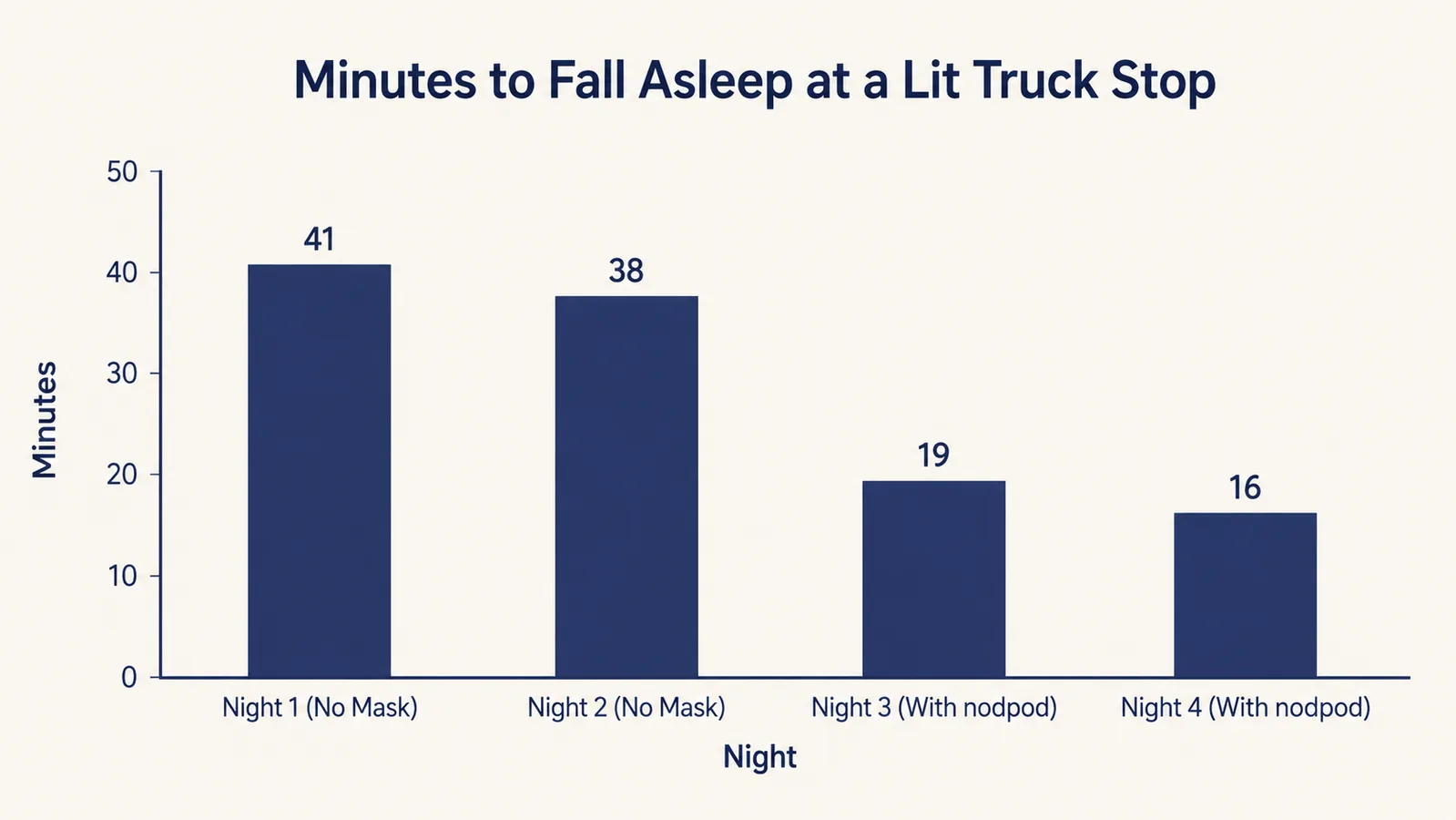
I ran a rough comparison over four nights at the same lot, same parking spot when I could manage it, two nights with no mask and two nights wearing the nodpod. The difference in how long it took me to actually fall asleep was noticeable, and not subtle. That's anecdotal, one driver, one notebook, but it matched what I felt every single week after that.
I also tried it during daytime sleep, which matters more than people think for drivers running night routes and sleeping through daylight hours. A friend of mine runs a lot of overnight freight and sleeps from 8 a.m. to 3 p.m. most days, which is a much harder light-blocking job than nighttime darkness ever is. I borrowed his cab for a week doing a swap route and wore the nodpod through three straight days of bright afternoon sun hitting the windshield curtain. It held up fine, no light leaking in around the edges even with full sun outside.
What I Looked At Before Buying This One
Donna didn't just grab the first weighted mask she found. Before she ordered the nodpod, she had two other options pulled up, a flat contoured mask with no weight that a lot of truckers on the forums swear by, and a heavier weighted mask marketed more for anxiety and general relaxation than for actual light blocking on the road. The flat contoured one was cheaper, and I almost told her to just get that instead. But every review I read on it mentioned the same problem I already had with my old bandana mask, it slips when you roll over, and in a sleeper cab bunk you roll over a lot more than you'd think in a space that tight.
The heavier relaxation-style mask looked appealing on paper, more weight sounded like it would mean better sleep, but the reviews kept mentioning heat retention issues even worse than what I ended up dealing with with the nodpod, plus a bulkier shape that seemed like it'd be a pain to pack next to my pillow and blanket roll in a cab that's already tight on storage. The nodpod's middle-ground weight and slimmer profile won out, and six months of use backs up that it was the right call for someone sleeping in a moving vehicle's bunk rather than a stationary bed.
Where It Struggles, Heat and Strap Fit
Summer is where I ran into the real complaint. My cab APU keeps things livable, but even at a comfortable cab temperature, the foam and fabric on this mask trap a little warmth against your face. On a hot July night with the AC set higher than I'd like to save fuel, I woke up once or twice with a sweaty brow under the mask. It's not unbearable, but if you run hot when you sleep, or you're doing a summer route through Texas or Florida without strong climate control, that's worth knowing before you buy.
The other issue is the strap. I've got a bigger head, and out of the box the strap sat a little snug, tight enough that I noticed it by hour four most nights. It's adjustable with a simple slide clip, so once I loosened it all the way and let it sit lower on the back of my head instead of higher, that mostly solved it. But that's a fifteen-minute fiddling session I had to figure out on my own, there's no real instruction for it in the box.
I'll also say the strap being a single continuous loop rather than two separate straps you clip behind your head means it can bunch up your hair a bit if you've got any length to it. Doesn't apply to me, I keep mine short, but Donna mentioned it the few nights she borrowed it to see what the fuss was about. She liked the light blocking as much as I did, but said she'd want a version built with longer hair in mind before she'd buy her own.
What I Liked
- Bead-weighted eye cups block light better than a flat mask or a bandana
- Contoured cups let you blink without eyelash contact, less claustrophobic feel
- Machine washable, which matters when you're wearing the same mask 20+ nights a month
- Stays in place when you roll over in a narrow sleeper cab bunk
- Adjustable strap once you take the time to fit it right
Where It Falls Short
- Runs warm on hot nights without strong climate control
- Strap needs manual adjusting for bigger heads, no clear sizing guide included
- Bead pockets can shift slightly over months of washing, need occasional resettling
- Not ideal if you sleep on your stomach and press your face into a pillow
It's not a miracle, it's a mask. But it's the first one that stayed put through a whole night in a moving-around sleeper cab, and that's worth more to me than any spec sheet.
Six Months In, Has It Held Up
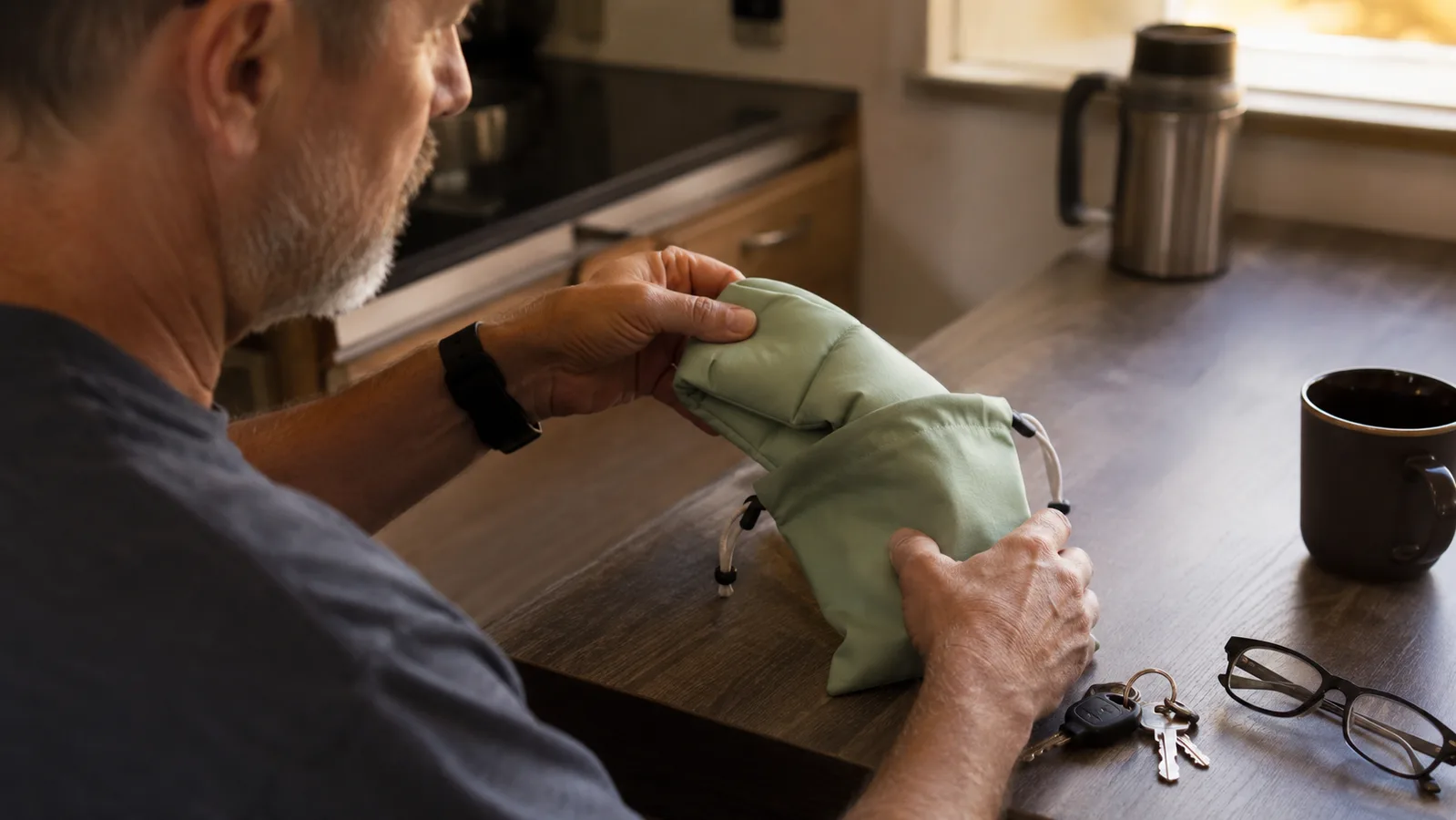
The fabric on my mask still looks close to new, no fraying at the seams, no bead leakage, which was my first worry given how often it gets tossed in a wash bag with my other cab linens. I wash it roughly every two weeks, on cold, air dry, and the bead pockets have held their shape. There's a very slight shift in how the beads settle after a few dozen washes, they clump toward the outer edge of each cup a touch, but it hasn't affected the light blocking or the fit in any way I've noticed on the road.
I did have to replace the strap's slide clip plastic once, it cracked in February when I tried adjusting it in freezing weather, brittle plastic and cold don't mix. I emailed nodpod's customer service and they sent a replacement part free of charge within a week, no hassle, which counted for something given how often companies make you jump through hoops for a two-dollar plastic clip.
I compared notes with another driver at my terminal, a guy named Curtis who bought one after seeing mine, and he had the same experience: good for the first four months, still solid after that, no strap breakage, no bead pockets tearing. That's a longer runway than a lot of cheap eye masks give you before the elastic goes soft or the seams start splitting.
Who This Is For
If you sleep in a place with light you can't fully control, a sleeper cab, a rest area, a hotel room with cheap curtains, a shared bedroom where your partner reads with a lamp on, this mask solves a real problem. It's also good for anyone who's tried regular sleep masks and hated how they press flat against your eyelids. The weight and the contoured cups are a genuinely different feel than a budget mask off a gas station rack. If you want a deeper side-by-side on how it stacks up against another popular option, I put together a nodpod vs Manta sleep mask comparison covering fit, price, and light blocking head to head.
It's also a solid pick for shift workers outside of trucking, nurses, warehouse guys on overnight schedules, anyone whose sleep window doesn't match the sun. The core problem, light finding its way in when you need dark, is the same whether you're in a sleeper cab or a daytime bedroom with thin curtains.
Who Should Skip It
If you run hot at night and don't have solid climate control, whether that's a truck without a good APU or a bedroom without AC, the warmth this mask holds against your face might bother you more than it helps. Stomach sleepers who bury their face in the pillow will also find the eye cups get pushed around and lose their seal. And if you've got a small head and the strap runs loose even at its tightest setting, you may need to look at a different sizing option before you commit. I go into more of the day-to-day nitpicks, including a couple of things I wish I'd known on night one, in my full honest review of the nodpod.
Side sleepers who favor one side heavily might also notice the eye cup on that side presses a touch harder into the pillow than the other, nothing that ruined a night for me, but worth a mention if you're a committed side sleeper who never rotates.
Six months later, this is still the mask in my cab door pocket every single trip.
If lot lights and gapped curtains are costing you sleep, this is the one upgrade I'd tell another driver to make first. See current price and real buyer reviews on Amazon.
Amazon Check Today's Price on Amazon →