
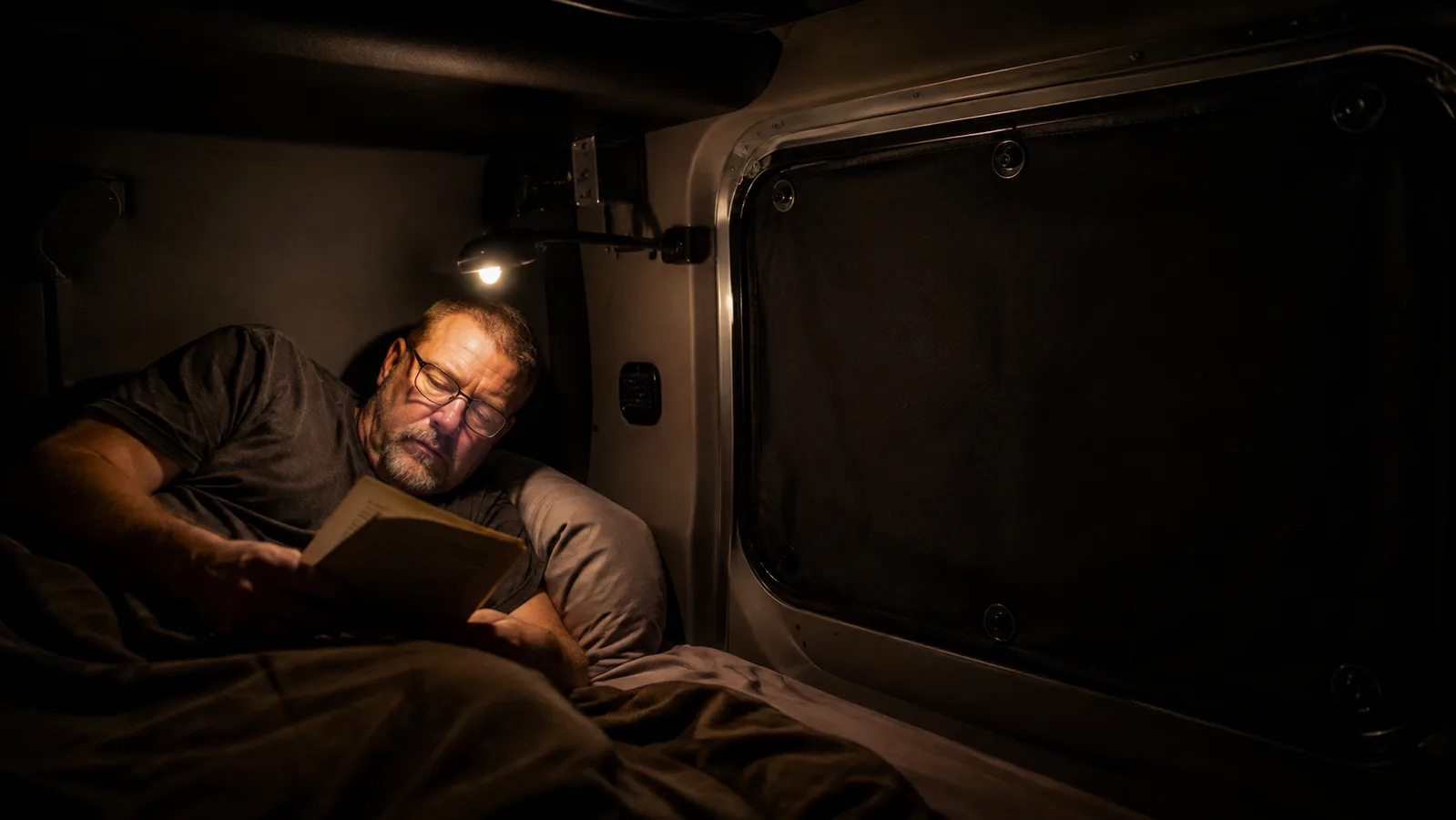
I've parked under some bad lights in nineteen years of driving, but the one outside Amarillo at a Flying J was in a class of its own. Nose-in spot, security floodlight bolted to a pole maybe thirty feet from my window, bright enough that I could read the print on a fuel receipt at 2 a.m. without touching a switch. My cab curtain did nothing against it. That was the night I finally ordered the DREAM ART portable blackout shade, the suction-cup kind you stick straight to the glass, and I've been using it almost every day since. It's been a little over a year now.
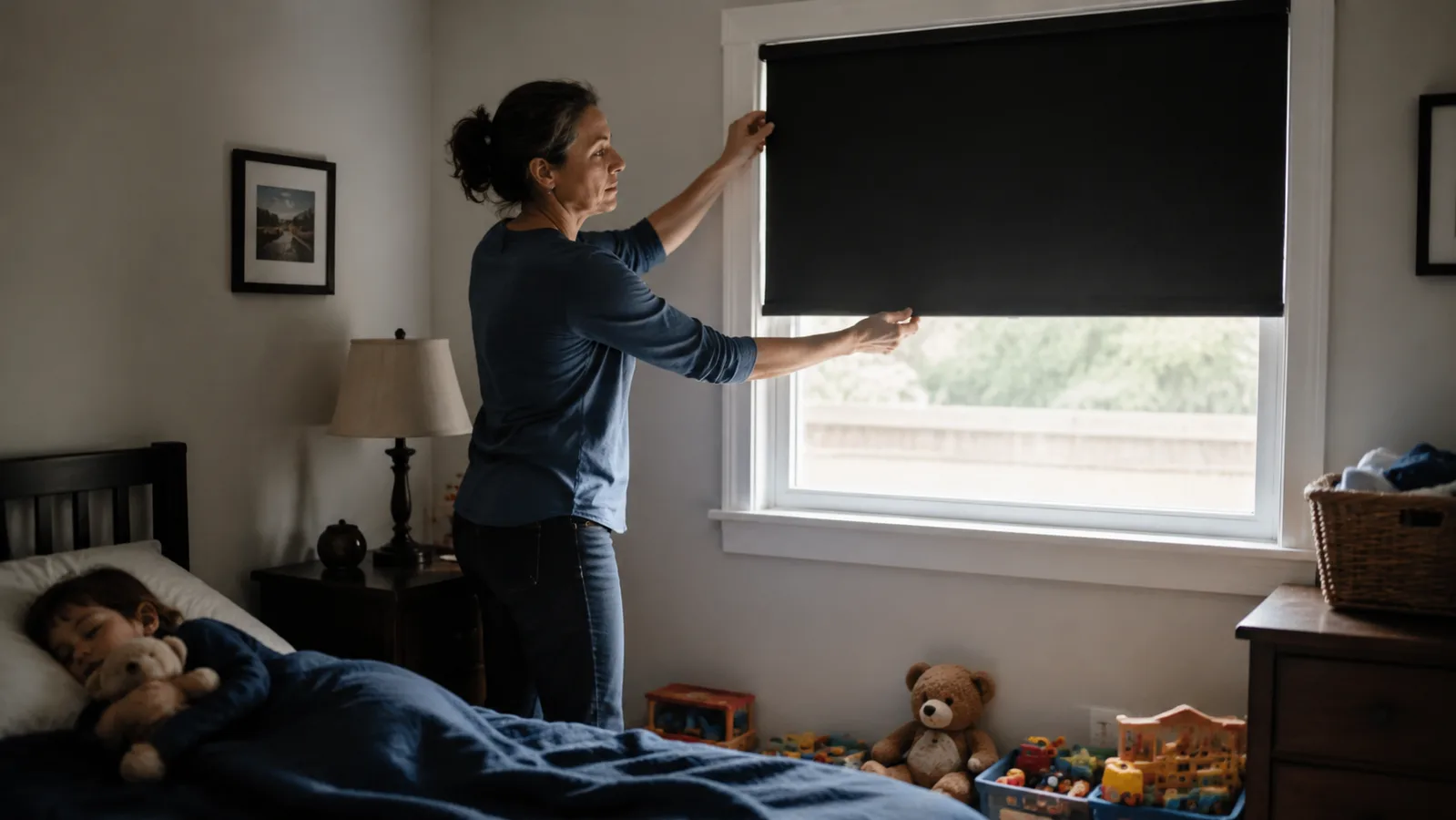
A year is enough time to find out if a budget piece of window gear is actually worth carrying, or if it just looks good the first week before something wears out. I've stuck this shade to my driver's side cab window more nights than I can count, and I've also stuck it to my daughter Katie's bedroom window at home so my wife Donna could get her down for an afternoon nap without the sun turning that room into a greenhouse by 1 p.m. Two very different jobs, same piece of black fabric and eight suction cups. Here's what actually happened over twelve months of both.
I wasn't expecting much going in, honestly. I've bought enough truck stop rack gadgets to know most of them look great in the package and fall apart inside a month. This one didn't fall into that pile, but it also didn't turn out to be some flawless miracle fix either. What follows is the plain version, the parts that held up and the parts that started to slip, month by month, on both windows I put it through.
The Quick Verdict
Blocks light close to fully in under a minute with no tools, and it's genuinely portable, but the suction cups start losing their grip on hot glass somewhere past month nine.
Amazon Check Today's Price →Still fighting a lot light through a gap in your curtain?
This is the shade I keep folded in my door pocket now, ready in under a minute on any window. Check today's price and reviews on Amazon.
Amazon Check Today's Price on Amazon →How I've Used It
I run mostly Southeast and Midwest routes out of Knoxville, and my cab window problem is never the same twice. Truck stop lots have those tall sodium lights that stay lit all night no matter where you park. Rest areas get headlight sweeps every time a car pulls in at 1 a.m. And my factory cab curtain, decent as it is, always leaves a gap of an inch or two right where my face ends up. The DREAM ART shade is a flat piece of blackout material with eight suction cups sewn into the back, and it comes in one size, W51 by L71 inches, but it folds and adjusts down small enough to fit a cab side window without hanging off the edges.
I started putting it up every night in the truck starting last spring, and I also brought a second one home so Donna could use it on Katie's window for nap time. That gave me two very different tests running at once, a moving truck window that gets full sun and full cold depending on the route, and a stationary house window that just needed to go dark for two hours a day, every day, rain or shine.
By the second week I noticed the difference between this and the cheap suction-cup shades I'd tried before. Those older ones I'd bought off a truck stop rack years back never sealed flush, there was always a curl at one corner letting a strip of light through. This one lays flatter against the glass because the fabric has some actual stiffness to it instead of being limp like a shower curtain. That flatness is most of why it blocks as much light as it does.
I also kept a rough log of it, the same way I did with a sleep mask I reviewed for this site, just a line or two most mornings in a notebook I keep in the door pocket. Not scientific, but enough to notice patterns instead of just going on gut feeling months later when I sat down to write this.
The Suction Cups Are the Whole Story
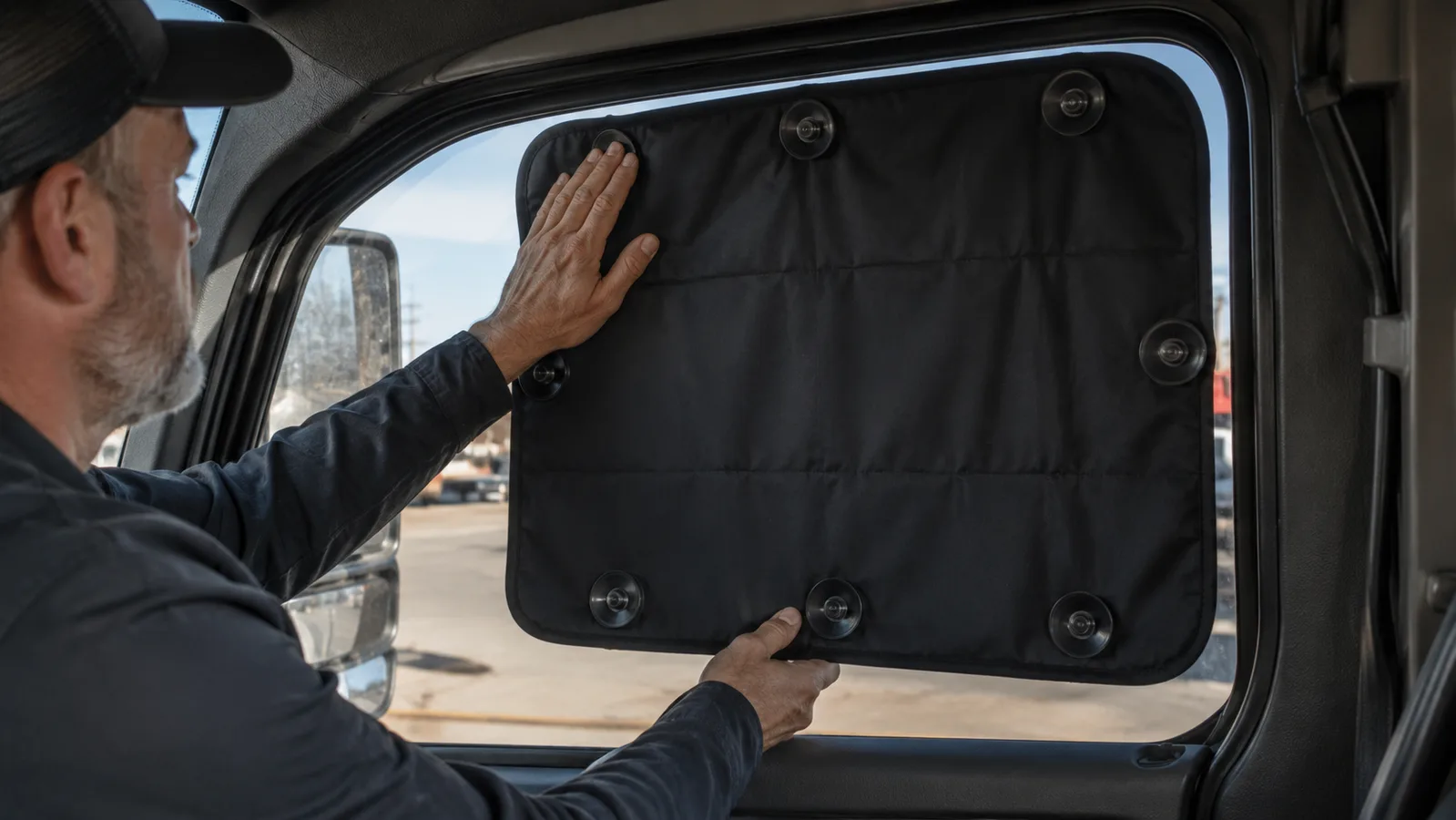
Eight suction cups hold this thing up, four along the top edge and four spaced down the sides, and every one of them matters. On a clean window, glass wiped down first with a rag, they grip hard enough that I've had the shade survive highway vibration overnight without dropping a corner. The first time I skipped cleaning the glass, in a hurry at a rest area, one cup let go by morning. That's on me, not the product, but it taught me the routine fast: wipe the glass, then mount.
The shade also folds down to about the size of a folded bath towel, so it lives in my door pocket next to a flashlight and a tire gauge without eating up real space. That portability is the entire reason I bought this over a set of curtains or a hard blackout panel. I can move it from the driver's window to the passenger side in under a minute if the sun swings around after I park facing a different direction than I expected.
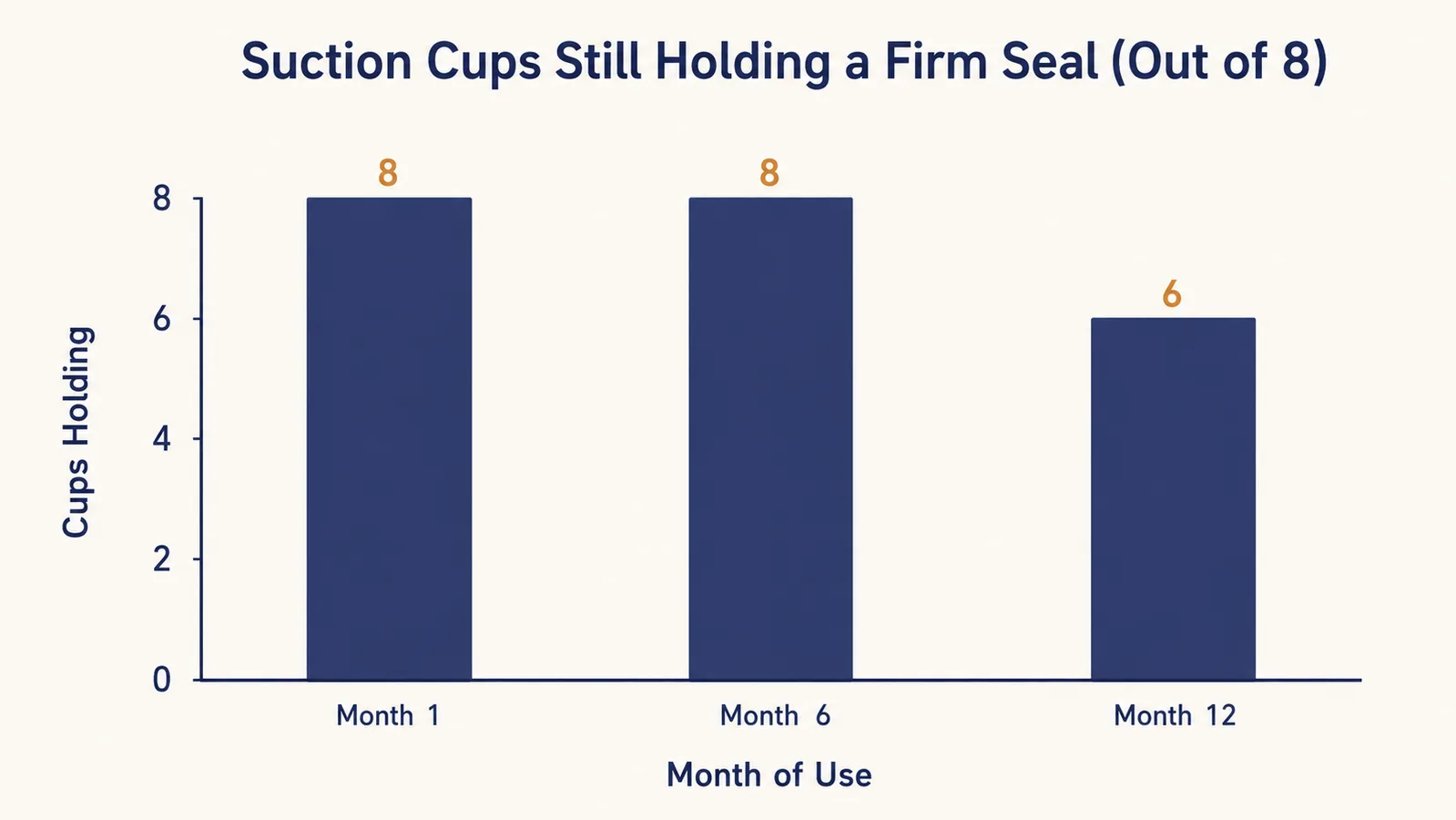
Where it started to show its age was almost exactly at the nine-month mark. Two of the eight cups had lost enough tackiness that they'd hold overnight but not through a hot afternoon parked in direct sun. By month twelve, six of the eight were still gripping like new, and two needed a quick press-and-hold every time I put the shade up instead of a single push. That's a real wear pattern, not a defect, suction cups are a consumable part on any product that uses them, but it's worth knowing going in.
I did try one thing that helped stretch the life of the weaker cups, a light misting of water on the cup itself right before pressing it down. It's an old trick from hanging shower caddies, and it bought me another couple of months on the two cups that were struggling most, though it's clearly a workaround and not a real fix.
A Full Year of Temperature Swings
Summer is where I expected trouble and mostly didn't get it, with one exception. On the hottest days, parked with the cab window in direct sun for hours, the suction cups softened just enough from the heat that they were more likely to slip if the glass had any dust film on it. That lines up with why the two weakest cups by month twelve were the ones on the side of the shade that faced south on most of my regular routes. Cold weather never gave me a single problem, the cups gripped just as well on a 20 degree morning as they did in July.
At home on Katie's window, which never sees anywhere near the heat a cab window does sitting in a parking lot all afternoon, the suction cups held their seal essentially the whole year with no noticeable loss of grip. That's a useful data point on its own, the wear I saw wasn't really about time passing, it was about heat exposure specifically. A shade doing nursery duty on a normal house window is going to outlast one doing daily duty against a truck window baking in the sun.
The one weather issue Donna did notice at home was a little condensation building up behind the shade on cold winter mornings, since the fabric traps a thin pocket of air against the glass. Wiping the window down once a week during the coldest stretch took care of it, but it's a small chore worth mentioning if you're planning to leave a shade up around the clock on a house window through winter.
Setting It Up in Under a Minute, Every Time
The actual mounting process never got more complicated than press cup, press cup, done. No tools, no adhesive strips, no measuring. Compare that to the last set of tension-rod blackout curtains I tried in the sleeper, which needed a rod wedged between two surfaces that were never quite the right distance apart in a cab. This shade goes up in about forty seconds once you've done it a few times, and comes down just as fast when I need daylight back in, say, to check a mirror or back into a tight spot.
The one-size cut, W51 by L71 inches, is bigger than most cab windows, so there's always extra material to fold over or tuck at the edges rather than a gap. On Katie's bedroom window at home it covers the whole frame with room to spare, which honestly does a better job of sealing out light around the edges than it does on some narrower cab windows where the extra fabric has to bunch up somewhere.
Other Options I Looked At First
Before I landed on this, I looked hard at a couple of other routes. A tension-rod blackout curtain kit was my first idea, but installing hardware inside a sleeper cab meant drilling or wedging something between the visor and the frame, and I wasn't willing to modify the cab for it. I also considered just doubling up my factory curtain with a cheap piece of foil board taped to the glass, which plenty of drivers do, but foil board cracks, doesn't fold, and looks like exactly what it is.
The suction-cup shade won out because it asks nothing of the window itself and nothing of the cab. It's the only option out of the three that works identically well on a truck window and a normal house window without any modification to either one, which is the whole reason I ended up buying a second one for Katie's room instead of trying to fix that window a different way.
Where It Falls Short
Black fabric in direct sun gets warm, and on the hottest parking lot afternoons I could feel a little extra heat radiating off the shade compared to the factory curtain it replaced. It's not enough to matter with the APU running, but it's a real tradeoff for a lightweight, portable product versus a heavier insulated curtain. I also don't think it's quite as opaque, corner to corner, as the actual blackout curtains I've since tried in a side-by-side test, which I wrote up in more detail in my portable blackout shade versus blackout curtains comparison. A determined sliver of light can still find the very edge of the frame if the window itself isn't perfectly flat glass.
And then there's the suction cup wear I already covered. If you're mounting this on a window that sees a full day of direct sun most days, plan on the grip weakening somewhere in the back half of the first year. It never failed on me outright, worst case I've had is a cup that needs re-pressing instead of holding on its own, but it's not a maintenance-free product forever.
For what it costs, well under the typical mid-range at today's pricing, I still think it's a fair trade. I've spent more than that on a single bad night's motel room trying to escape a lit-up parking lot outside my window, and this shade has paid for itself in avoided headaches many times over across the year.
What I Liked
- Blocks close to full light in under a minute, no tools or adhesive needed
- Folds small enough to live in a truck door pocket or a drawer at home
- One size covers most cab windows and standard bedroom windows with room to spare
- Suction cups held a full firm seal for at least the first six to nine months
- Works identically well on a stationary house window as a moving cab window
Where It Falls Short
- Suction cup grip weakens on windows that see daily direct sun exposure after roughly nine months
- Black fabric gets noticeably warm in direct sunlight
- Not quite as fully opaque at the edges as a proper hung blackout curtain
- Requires a clean, dust-free window surface for cups to grip their best
The window went from lit up like a gas station canopy to pitch dark in about forty seconds flat, and it stayed that way through a full night's highway vibration.
Who This Is For
If you're a driver dealing with the same lot lights and gap-prone cab curtains I've fought for years, this shade solves a real problem fast and packs down small enough to be worth the trouble. It's also a solid pick for anyone who needs a window dark on a schedule that doesn't match the sun, like a parent trying to get a toddler down for a nap at 1 p.m., or someone working night shifts who needs their bedroom dark during the day. Renters and anyone in a temporary space will like that it needs zero permanent hardware, and it travels well if you're the kind of family that stays in a lot of hotel rooms with thin curtains.
Who Should Skip It
If your window sits in direct sun most of the day and you want something that never needs a re-press of a suction cup, ten years down the line, a hung blackout curtain with real hardware is going to outlast this. Anyone with an oversized picture window is also going to find the one-size cut leaves gaps this shade wasn't built to cover. I go through more of the day-to-day annoyances, including a couple of things I wish I'd known before my first mount, in my full honest review of the DREAM ART blackout shade.
A year later, this is still the shade I reach for on any window that won't go dark on its own.
If a lot light or a stubborn curtain gap is costing you sleep, this is the cheapest, fastest fix I've found. See current price and real buyer reviews on Amazon.
Amazon Check Today's Price on Amazon →