
Everybody who reviews a sleep mask talks about the light blocking and stops there. Nobody mentions that the thing smells like a tire shop for the first two days out of the bag, or that the beads inside those eye cups will pile up on one side after enough washes and need to be worked back into place with your own fingers like bread dough. Nobody mentions that the little rustle the beads make when you turn your head can be enough to wake a light sleeper in the next bunk over. I've had my nodpod for going on eight months now, and my wife Donna has had her own since April, and between the two of us we've found every one of the quiet annoyances that never make it into a five-star Amazon review.
This isn't the article where I tell you the mask changed my life. I already wrote that one, and you can read my six-month long-term review if you want the full arc, the good and the bad both. This is the shorter, blunter version. What actually happens after the honeymoon period wears off. What I'd have wanted somebody to tell me before I handed over my card, instead of finding it out the hard way over the following two months.
The Quick Verdict
Still the best light-blocking mask I've used, but the smell, the bead settling, and the nose bridge gap are real issues nobody mentions until you own one.
Amazon Check Today's Price →Before you buy one, know what you're actually getting.
The nodpod earns its reputation on light blocking, but go in knowing the small stuff too. Check today's price and read the buyer reviews yourself on Amazon.
Amazon Check Today's Price on Amazon →How I Tested It This Time
For this review I wasn't trying to see if the mask worked, I already knew it did. I was trying to catch every small complaint a first-time buyer would run into and not know what to do with, the kind of thing you only learn by living with a product past the point where most reviewers stop paying attention. So I timed things. I timed how long the new-mask smell hung around before it faded. I weighed the mask before and after six weeks of every-other-day washing to see if it lost any bead fill down the drain. I asked Donna to log her own notes separately from mine, since she wears hers mostly at home in a quiet bedroom in Knoxville and I wear mine in a sleeper cab bouncing down I-40, and those are two very different tests of the same product.
I also called nodpod's customer service line once, not because anything broke, but because I wanted a straight answer on their actual policy for bead settling and washing frequency, since the little card that comes in the packaging doesn't say much beyond machine washable, gentle cycle, lay flat to dry. I'll get to exactly what the rep told me further down, because it changed how I look at the whole bead migration issue.
I also brought a coworker into it without meaning to. Rico, a team driver out of the same terminal, borrowed mine for a weekend run when his own mask went missing somewhere in a motel laundry bag. He came back with two complaints I hadn't logged yet, so I've folded those into this review too, since a second set of eyes, or eyes covered by a mask in this case, catches things one person misses.
None of this is a lab test. It's one driver, one wife, one coworker, one sleeper cab, one bedroom, and a fair amount of note taking over eight months. But it's a more honest picture than a listing photo of a woman smiling peacefully in a mask that's never once been washed or worn past the first night.

The Smell Nobody Mentions
Pull a nodpod out of its packaging and the first thing you'll notice isn't how soft it is. It's the smell. It's a faint rubbery, slightly chemical smell that comes off new foam and fresh fabric dye, the same smell you get from a brand new yoga mat or a car's interior straight off the lot. It's not offensive exactly, but if you're sensitive to smells near your face, and plenty of people are, wearing it straight out of the package on night one is not pleasant, and it can even give a sensitive sleeper a mild headache before they've fallen asleep at all.
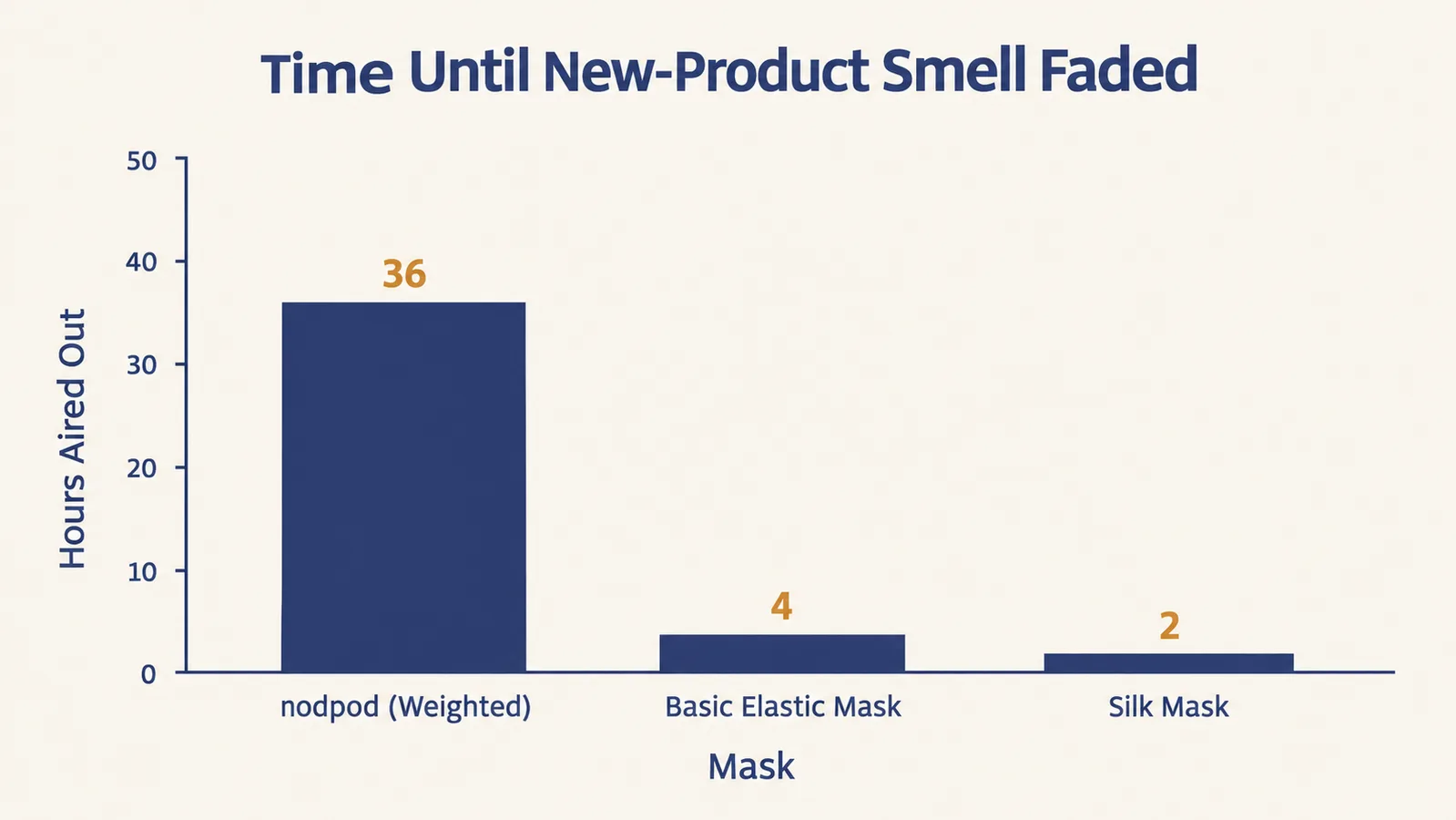
I timed it. It took roughly a day and a half of leaving mine out on the dresser, uncovered, before the smell faded to nothing I could notice. Donna's took almost the same amount of time. A cheap elastic mask I bought years ago from a gas station rack lost its smell in a few hours, barely worth mentioning. A silk mask I tried once had almost no smell at all straight out of the package. That's the tradeoff you make for the foam and bead construction that gives this mask its actual function, but it's worth airing yours out for a day or two before your first night with it, not wearing it fresh from the box the way the listing photos quietly imply you should. I keep telling other drivers the same thing when they ask me about it at a truck stop counter: unpack it the moment it shows up, let it sit on the dash or the dresser, and don't judge the smell until it's had a fair chance to clear.
Washing didn't do anything for the smell either, not the first time through. I ran mine through a gentle cycle before ever wearing it, thinking that would knock it out faster than just airing it on the dresser, and pulled it out of the dryer smelling almost exactly the same, just a shade fainter. Whatever's causing the smell is baked into the foam and the bead fill itself, not something sitting on the surface a wash cycle can strip away. Time in open air, not water, is what actually clears it.
The Bead Migration Problem
This is the one that surprised me most, because it doesn't show up until you've owned the mask a while and it's easy to miss if you're only reviewing it after a week. Each eye cup is its own little pocket of glass beads, and after enough nights and enough washes, gravity and motion start pulling those beads toward the outer edge of each cup instead of sitting evenly across the middle, the way they did brand new. Mine started doing it around week five. Donna's did it a little later, closer to week eight, probably because she washes hers less often than I wash mine given how much dust and diesel exhaust mine picks up on the road.
The fix is simple, you just knead the pocket with your fingers for ten or fifteen seconds before you put it on, working the beads back toward center, and it holds for another week or two before it drifts again. It's not a defect exactly, it's just physics working on a bag of beads over months of use, but it's the kind of thing a first-time buyer would open a support ticket over if nobody warned them first. When I called customer service about it, the rep confirmed it's expected behavior on a mask this shape, and told me kneading it back into shape is the recommended fix, not something you need to return the mask over or worry is a manufacturing flaw. She also mentioned that washing it inside a mesh laundry bag on a gentle cycle slows the migration down some, which I've since started doing and it does seem to help, though it hasn't stopped it entirely.
There's a real functional cost to the migration too, not just a cosmetic one. Once the beads pile up along the outer rim of a cup, the middle of that cup goes thin, and thin is exactly where a stray hallway light or a dome light in a cab finds its way in. I didn't connect the two the first few weeks, I just noticed a faint glow on my right side some nights and figured the mask had shifted on my face while I slept. It hadn't. It was the beads that had wandered off from directly over my eye. Once I started kneading them back into place before bed, the glow stopped showing up. So the fix for the rustle and the fix for a stray light leak turned out to be the exact same five seconds of work with your fingers.
The Nose Bridge Gap
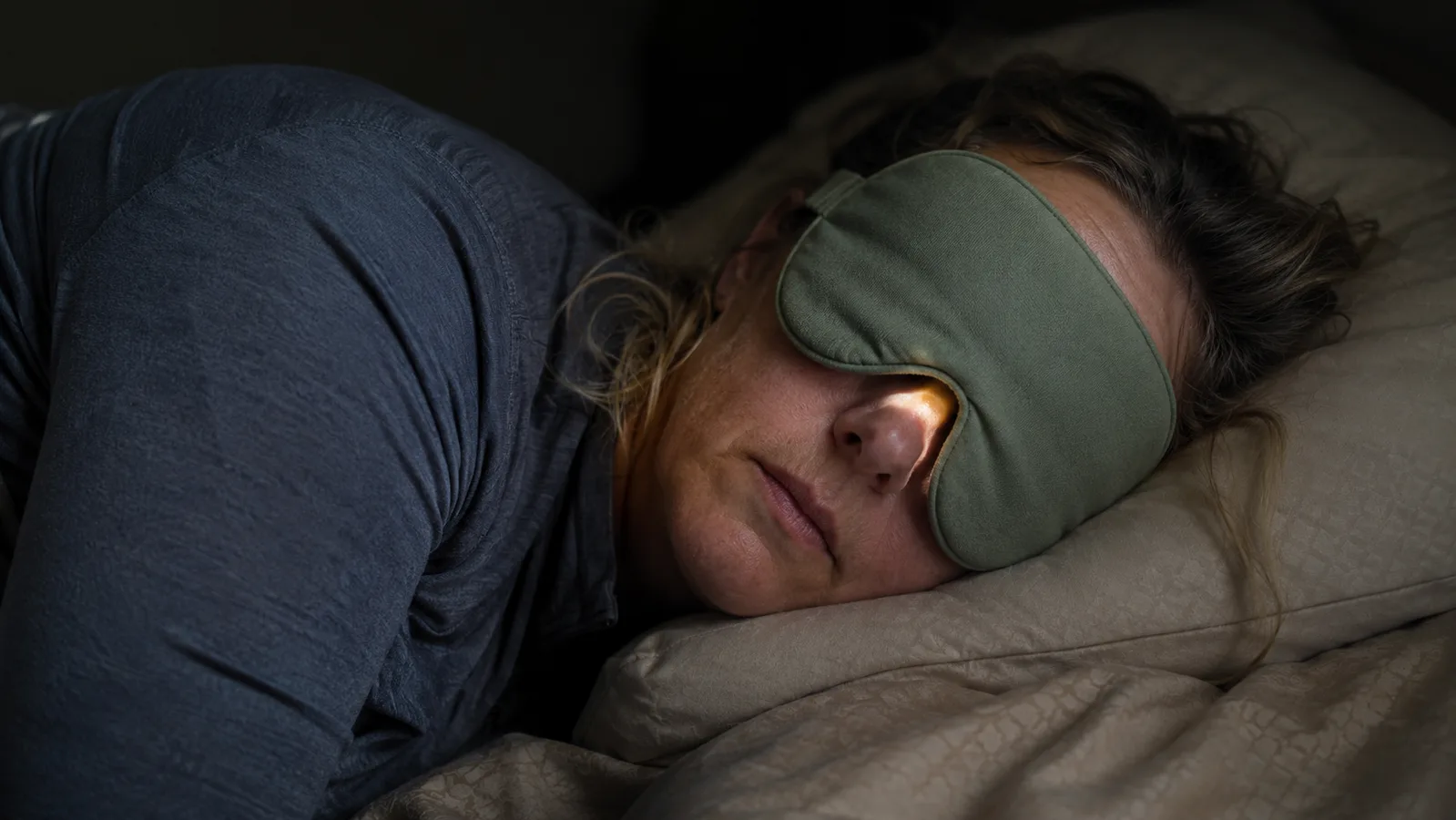
This is the complaint I see most often in the lower-starred Amazon reviews, and it tracks with what Donna told me too, unprompted, the second week she had hers. The two eye cups are joined by a soft bridge of fabric where the mask sits over your nose, and depending on your face shape, that bridge doesn't always seal flush against your skin. On me, with a broader nose bridge, it seals fine every night, no exceptions. On Donna, who has a narrower bridge, there's a thin sliver of light that sneaks in from below on nights when a hallway light or a lamp is left on nearby, close enough to the bed to matter.
It's not enough light to wake her up most nights, but it's enough that she noticed it right away and mentioned it before I even asked her opinion. If your bedroom or your sleeper cab has any light source at floor level or off to the side rather than straight overhead, that nose gap is where it's going to sneak in on you too. Nobody mentions this in the glowing reviews because it depends entirely on your specific face, and reviewers who don't happen to have the problem simply never think to bring it up. Donna's workaround, for what it's worth, is tucking a folded washcloth just under the bridge on the nights the hall light stays on, which is not an elegant fix but it does the job.
I ended up asking three other drivers at a truck stop outside Amarillo to try mine on for a minute, just to see if the gap was a Donna-specific thing or something more common. Two of the three, both with narrower, higher-bridged noses like hers, said they could feel a thread of air and a hint of light getting through right where the two cups meet. The third, built more like me with a broader bridge, said his sealed up fine. That lined up close enough with what I already had at home that I'm comfortable calling it a real fit issue tied to face shape, not a fluke with Donna's mask specifically.
The Rustle That Woke Rico
This was Rico's complaint, not mine, and it's a genuinely useful one for anyone considering this for team driving or sharing a bed with a light sleeper. Because the eye cups are filled with loose glass beads rather than solid foam, turning your head on the pillow makes a faint shifting, sand-like rustle as the beads redistribute. On my own runs, sleeping alone in my cab, I never noticed it. Rico, sleeping in the lower bunk while his co-driver was up front, said the rustle from my mask a few feet away was faint but noticeable in an otherwise dead-quiet cab at 3 a.m., enough that it took him a minute to place the sound the first night.
It's a small thing, and most people sleeping solo will never register it. But if you're a light sleeper yourself, or you share a bed or a bunk with one, that quiet bead shift with every head turn is worth knowing about before you buy, especially since it's not something a still product photo could ever tell you.
Rico's fix, once he knew what the sound actually was, turned out simpler than I expected. He just tucked a folded shirt along the edge of his pillow to muffle it, the same trick some drivers use to quiet a rattling vent overnight. It worked well enough that he stopped noticing it by the second night of his run. That silk mask I mentioned earlier made no sound at all turning my head, for the simple reason it has nothing loose inside it to shift. That's the tradeoff. Dead silence with less weight and less light blocking, or a faint rustle with beads that actually do something for you on a rough night.
Is It Actually Worth It
I didn't buy the nodpod blind. I'd read up on a few alternatives first, mostly because thirty-some dollars for an eye mask felt like a lot to spend without doing some homework, especially compared to the three-dollar elastic masks stacked at every truck stop checkout counter. The main one I looked at seriously before buying was the Manta Sleep Mask, which takes a completely different approach, adjustable eye cups you can move to fit your exact eye socket depth instead of a fixed weighted design with beads inside. I ended up writing a full nodpod vs Manta sleep mask comparison once I'd used both long enough to have an honest opinion, because the two solve the light-blocking problem in genuinely different ways and they're not really interchangeable answers to the same question.
Short version for here: the nodpod wins on comfort for side sleepers and on that settling weight that actually helps some people fall asleep faster on a rough night. The Manta wins on pure zero-light-leak sealing for people who need total blackout no matter what, and it doesn't have a bead migration issue since there's nothing inside it to migrate in the first place. As for the price itself, once you factor in that a cheap elastic mask needs replacing every few months from the elastic going slack, while my nodpod is still holding its shape at eight months, the gap closes some. It's still a real jump up front, and I won't pretend otherwise, so I'd rather you go in knowing exactly what that money buys you instead of assuming it's a flawless product because the star rating is high.
What I Liked
- Still the best light blocking I've found for a sleeper cab bunk or a bedroom with stray light
- Bead weight genuinely helps some nights when your mind won't quiet down
- Machine washable and holds up structurally over many months
- Customer service was responsive and upfront about the bead settling issue when I called
Where It Falls Short
- Strong new-product smell for the first day or two that reviewers rarely mention
- Bead pockets migrate to the outer edge over weeks of use and need manual kneading
- Nose bridge seal isn't universal, narrower face shapes can get a thin light leak
- Faint bead rustle with head movement, noticeable to a light sleeper nearby
- At full price it's a real step up from a budget elastic mask, and that gap matters to some buyers
The mask still works. That was never in question. What I wish somebody had told me is that it takes a day to stop smelling like a tire shop, a few seconds of kneading every week to keep the beads sitting right, and a little patience if you share a bunk with a light sleeper.
Who This Is For
If you already know you want a weighted mask and you're deciding between brands, the nodpod is a solid pick, especially if you're a side sleeper or you toss and turn, since the contoured cups hold their seal better than a flat mask when your face moves against a pillow. It's also a fair choice if you don't mind a little maintenance, airing it out before first use and kneading the beads back into place every week or two, in exchange for genuinely good light blocking that a cheap elastic mask can't match.
Who Should Skip It
If you're sensitive to smells near your face and won't remember to air a new mask out before wearing it, that first day or two could be rough on you. If you have a narrower nose bridge and you sleep somewhere with a light source at floor level or off to the side, like a nightlight or a hallway gap, you may find the small leak more bothersome than I do. If you're sharing a bunk or a bed with a genuinely light sleeper, the faint bead rustle is worth testing before you commit both of you to it. And if the idea of periodically kneading bead pockets back into shape sounds like a chore rather than a minor habit, a mask without internal fill, like the Manta I mentioned above, might suit you better long term.
Knowing all of that, I still reach for mine every night.
The rough edges are real, but so is the light blocking. See current pricing and read what other buyers are saying on Amazon.
Amazon Check Today's Price on Amazon →