
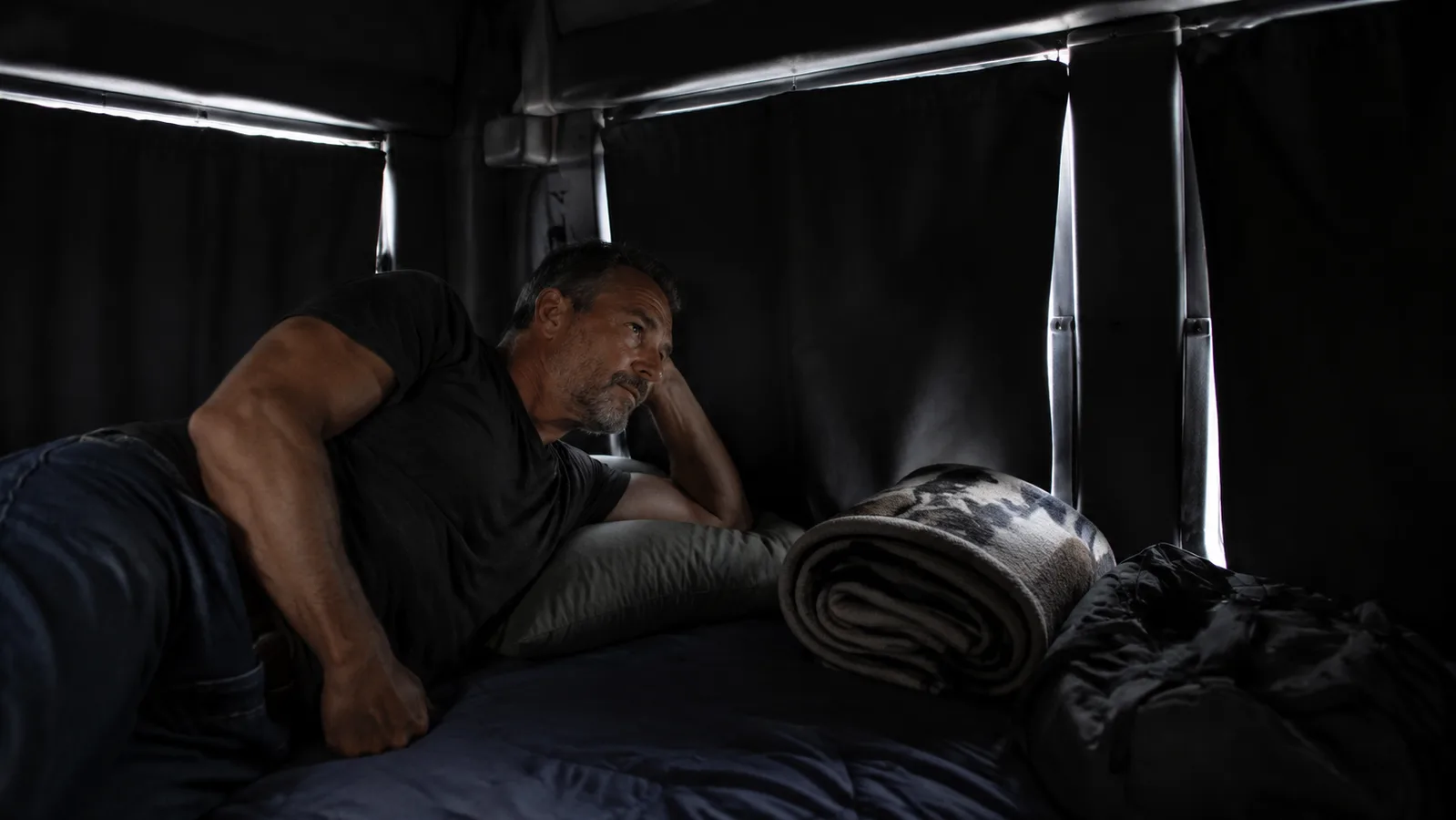
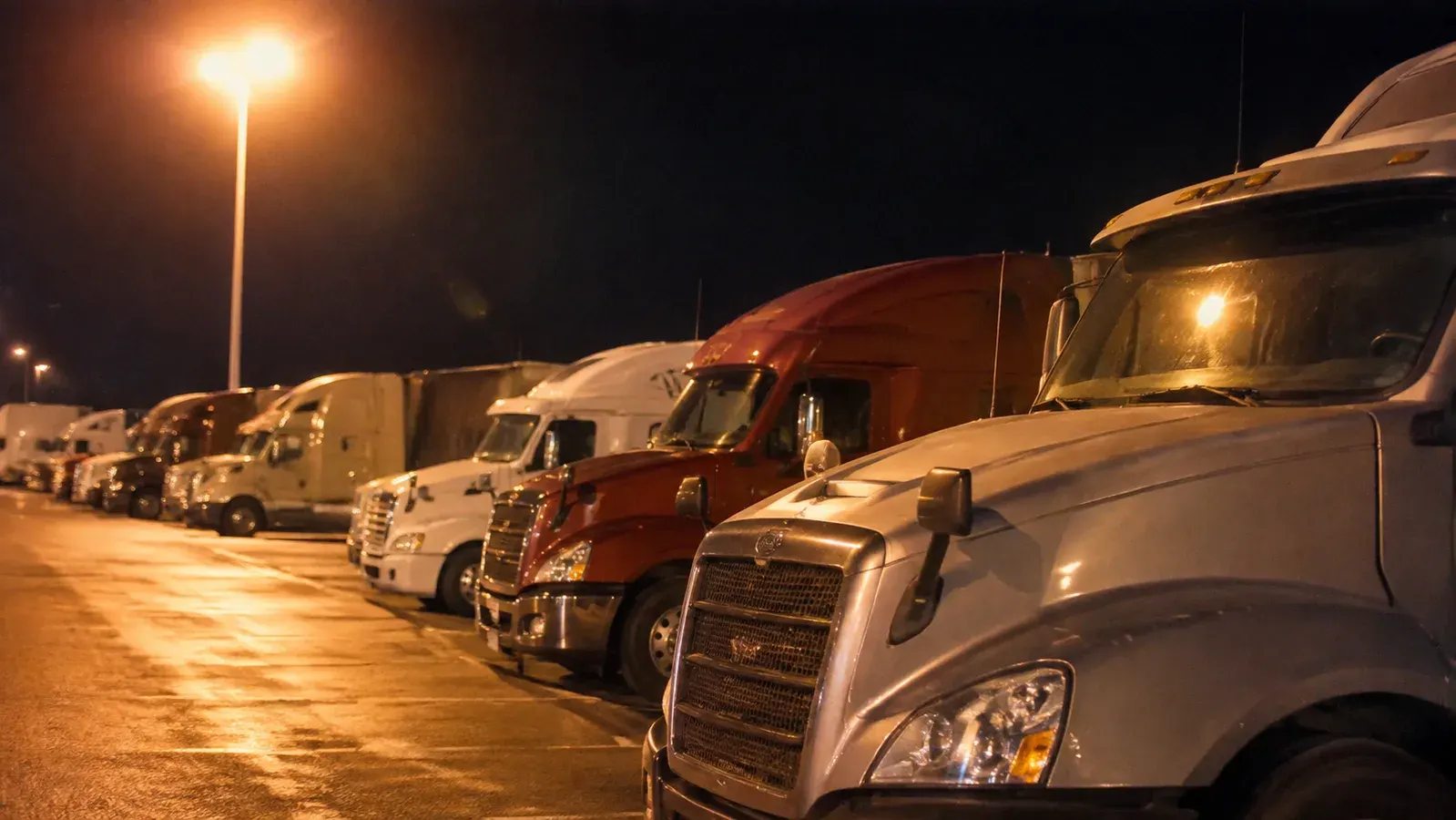
I've slept more days than nights for nineteen years now. Wake up at two in the morning, drive till noon, then try to get real sleep in a truck stop lot with a pole light bright enough to read a map by, parked twenty feet off my windshield. If you've never had to sleep like that, it's hard to explain how much it wrecks you. If you have, you already know the curtains that came with the truck aren't built for it, and you probably already own a weighted sleep mask or two that never quite finished the job on their own.
Your hours of service don't care what time it is outside. When your clock says sleep, you sleep, whether that's noon at a Pilot off I-40 with the sun straight overhead or six in the evening at a rest area with headlights sweeping the lot every few minutes. Early in my career I fought this with a bandana over my eyes and lost more sleep than I got. It took me years to build a system that actually works every time, not just on the lucky days.
Bad daytime sleep doesn't just leave you tired, it stacks up. A driver running on broken two and three hour naps for a week is slower to react, shorter with his family on the phone, and hungrier for the wrong food at every stop because his body is running on empty. I've watched it happen to guys I trained. Fixing the sleep fixed most of the rest, and it started with fixing the cab, not with anything fancier than that.
This is the exact system I run before every daytime sleep, in order, every time. It starts with killing light inside the cab, moves to blacking out the windows properly, and ends with a weighted sleep mask over my eyes for whatever gets through anyway. None of these steps replace each other. Skip one and the whole thing leaks.
The curtains fight the sun. This is what fights everything the curtains miss.
A weighted eye mask isn't the first thing you need for daytime sleep, it's the last thing. Once your cab is as dark as you can make it, the nodpod weighted sleep mask closes the gap around your nose and eyes that elastic masks always leave open.
Amazon Check Today's Price on Amazon →Step 1: Kill Every Light Source Inside the Cab First
Before I even touch the windows, I walk the cab and kill anything that glows on its own. Dash clock, CB radio display, phone charging on the dash, the little LED on a fridge or inverter. Each one is dim by itself, but your eyes adjust to darkness over a few minutes, and once they do, a single blue charging light is enough to keep you rolling over.
I keep a strip of black electrical tape in the door pocket just for this. Anything with a light I can't switch off gets a piece of tape over it. Takes thirty seconds and it's the cheapest fix in this whole guide.
Phone goes face down or in the console, never propped up where the screen can flash a notification into the bunk. I learned this one the hard way outside a Flying J in Amarillo, waking up every time a text came in because the screen lit the whole curtain like a flashbulb.
Don't forget your own clearance lights and marker lights either. Parked nose-in against a light-colored wall or another trailer, those amber lights can bounce enough glow back through the windshield gap to matter. Kill the parking lights once you're chocked and settled, and check for that bounce before you ever put a mask on, since no mask fixes a problem you haven't dealt with at the source.
Step 2: Blackout the Windows With Curtains and Static Cling
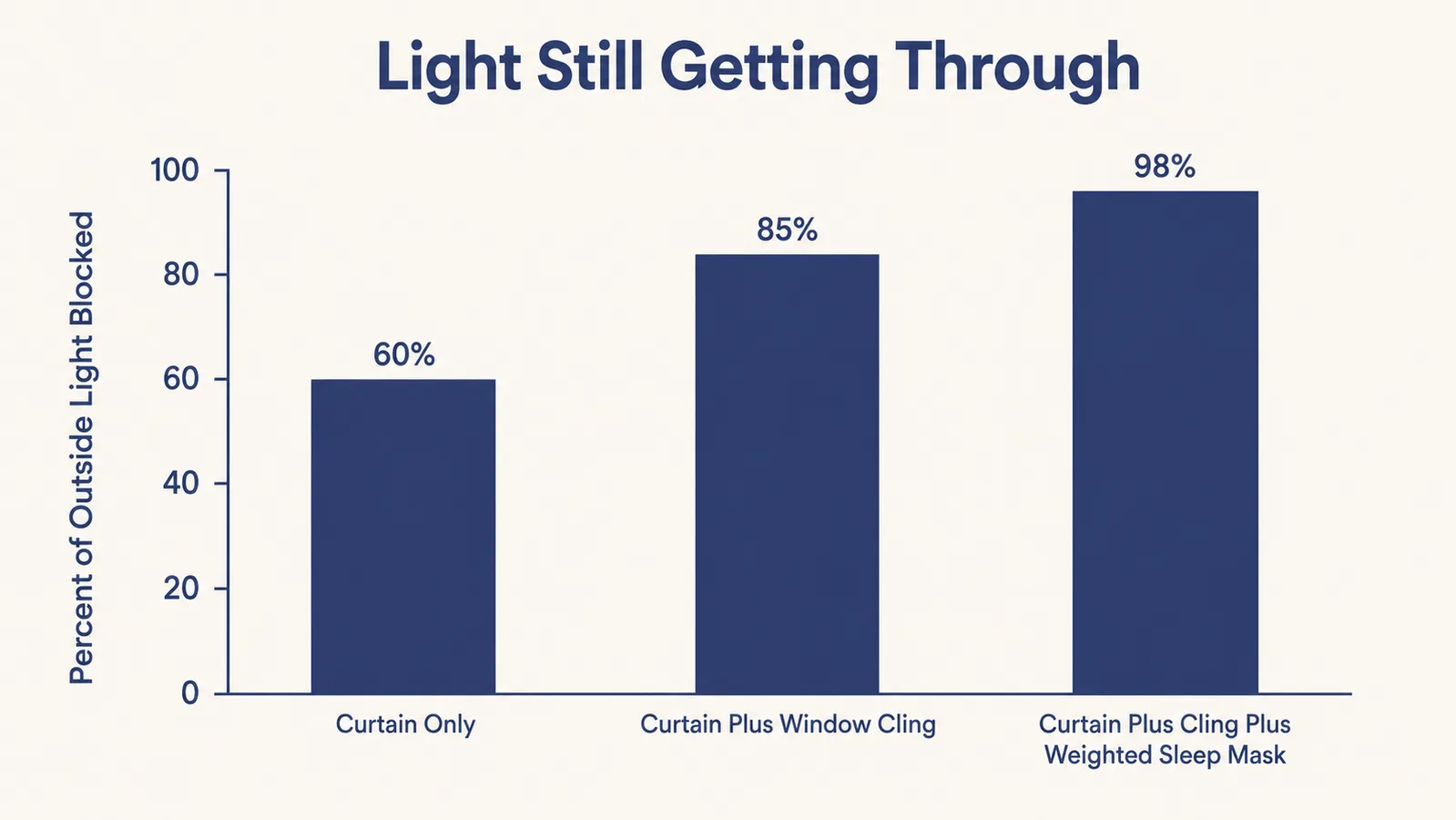
The factory curtain in most sleepers is thin enough that noon sun turns it into a lamp shade. I run a second layer, blackout curtain fabric from a fabric store, hemmed to fit and hung on the same track behind the factory curtain. Two layers of fabric with an air gap between them blocks far more than one thick layer, the same way double pane glass beats single pane.
For the windshield and side windows I use static cling window shade, the kind that presses onto glass with no adhesive and pulls off clean. It's not perfect at the edges, but it kills the direct beam of sunlight that a curtain alone lets bend around. I cut mine to shape once and keep them rolled in a tube behind the seat.
Do the windshield last, since that's where the worst of it comes from if you're nose-in at a truck stop with the lot light or the sun straight on the glass. A driver I know runs a magnetic sunshade instead of cling, same idea, whichever sticks to your glass without leaving residue.
The whole job costs less than a tank of fuel and takes one slow afternoon to set up right, less time on every stop after that. I measured mine once with a tape measure and cut every panel from a single roll of blackout fabric, so if you tear one on a hook or a zipper pull, you've got a matching scrap to patch it instead of starting over.
Step 3: Seal the Gaps Where Light Sneaks Around the Edges
This is the step almost everybody skips, and it's the one that matters most. Curtains have gaps at the top of the track, at the sides where they overlap, and along the bottom hem near the dash. Light doesn't need much of a gap, a quarter inch strip of daylight across your eyelids for eight hours will still wear you down.
I sewed a strip of heavy fabric across the top of my curtain track so light can't come down from above, and I run a length of self-adhesive felt weatherstripping along the overlap where the two curtain panels meet in the middle. Same stuff you'd use to seal a drafty door. Cheap, and it closes the seam completely instead of just darkening it.
I found this out the hard way at a lot outside Knoxville, parked directly under a pole light with the curtain closed tight, and still couldn't figure out why I kept surfacing every hour. Turned out a two inch gap at the very top of the track was throwing a bar of light straight down onto my pillow. Fixed the top seal that same week and never had that problem again.
Step 4: Wear a Weighted Sleep Mask for Whatever Still Gets Through
Even with all of that done right, something always gets through. Your curtain shifts an inch when a truck idles past and rocks the cab. Your partner rolls over and the bunk curtain gaps for a second. A weighted eye mask is what catches that last piece, and it's the reason I never sleep without one anymore, at home or in the truck.
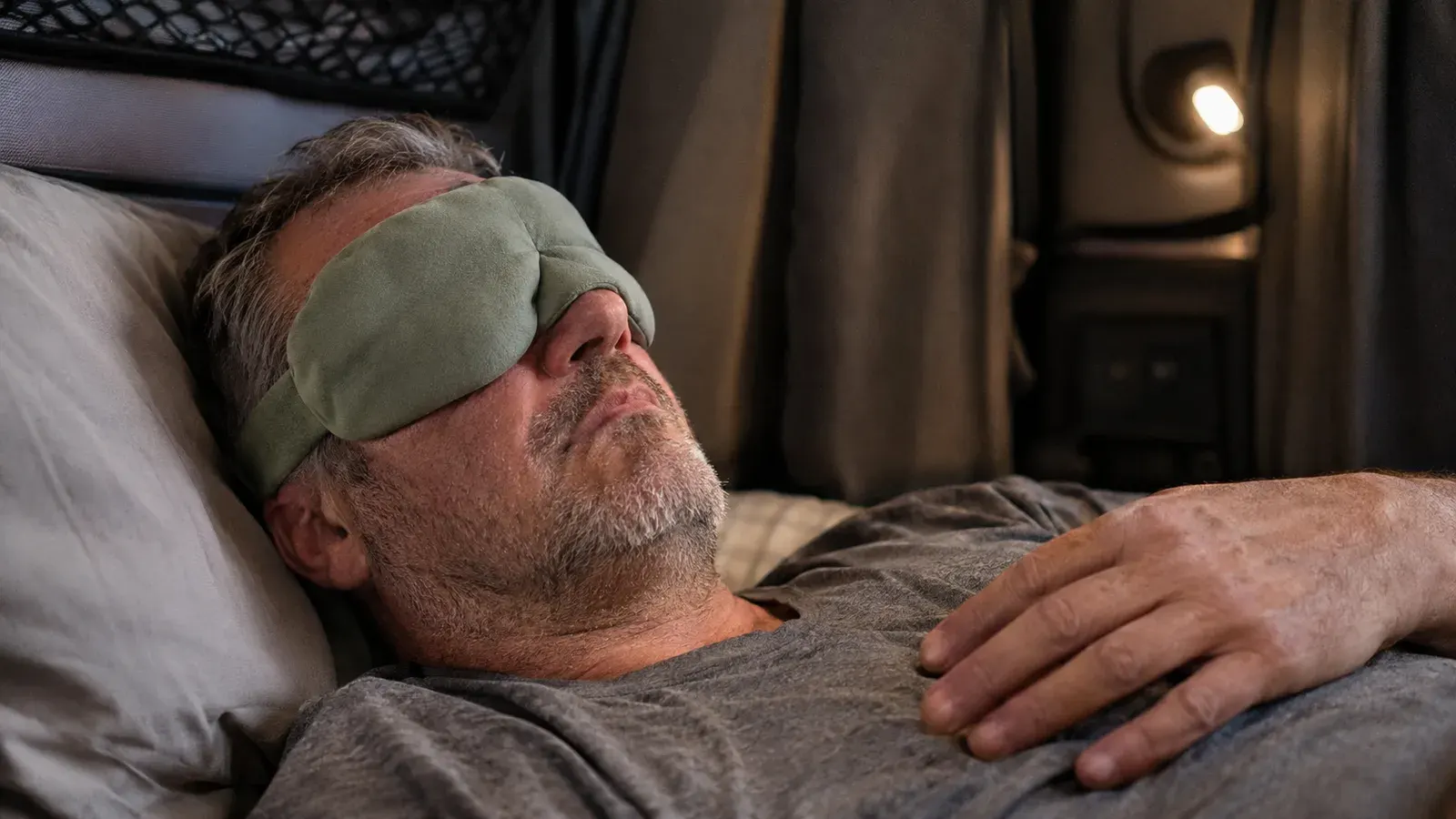
I use the nodpod weighted sleep mask, the sage green one filled with small beads instead of a hard plastic shell. It rated 4.5 stars from over eight thousand people last time I checked, and having worn regular elastic sleep masks for years before it, I can tell you why it holds up better in a bunk. The gentle weight settles it against your face along the whole edge, cheekbones, temples, bridge of the nose, instead of just pulling tight with elastic and leaving a gap right at the nose where light always finds its way in.
It's machine washable too, which matters more than people expect when you're wearing the same mask against your face five nights a week in a cab that never quite stops smelling like diesel and fast food. I toss mine in with a load of shirts every couple weeks and it comes out fine.
For side sleepers, which most of us are in a bunk that's barely wider than your shoulders, a weighted sleep mask beats the rigid contoured kind hands down. Those hard shell masks dig into your cheekbone the second you turn on your side, and I've had drivers tell me they wake up with a red line pressed into their face. The soft bead fill on this one just flexes with your face no matter which way you're facing.
One more thing worth mentioning, the strap on this mask sits soft against the back of your head instead of a thin elastic band digging a groove into your hair. In a bunk where you've got no pillow to spare and your head is half on the mattress, half on a rolled up hoodie, that matters more than you'd expect over an eight hour stretch.
Step 5: Build the Same Routine Every Time You Park
The system only works if you run it in the same order every single time, not just on the days you remember. Park, curtains first, cling shades if the sun's straight on the glass, phone face down, mask on last. Same order, every stop, whether it's a quiet rest area at 6 a.m. or a packed lot at noon with a diesel idling six feet from your window.
Your body learns the routine faster than you'd think. After a few weeks the act of putting the weighted sleep mask on became its own signal to my brain that it was time to shut down, almost like the mask itself was part of falling asleep and not just something blocking light.
When the alarm goes off, I reverse it in the same order, mask off, cling shades folded and stowed, curtain cracked an inch before I fully open it so my eyes have a second to adjust instead of getting hit with full sun straight off a pillow. Little thing, but it keeps the transition from feeling like getting punched awake.
What Else Helps
Earplugs are the other half of this, foam ones that actually seat in the canal, not the flat orange kind that fall out when you turn your head. Keep the cab a few degrees cooler than you'd think, a warm bunk fights sleep just as hard as a bright one. And if you want the full case for why a weighted mask helps you fall asleep faster in the first place, not just block light but actually calm you down, I laid out all of that in 10 Reasons Weighted Sleep Masks Help You Fall Asleep.
If you're deciding whether the nodpod is worth adding to your own routine, I've been running the same one for six months now and wrote up everything that's held up and what hasn't in my long-term nodpod review. Between the two pieces you'll have the whole picture, not just this one system.
Try to keep your wake up time consistent too, even on your days off. Sliding your sleep schedule around on home time throws away most of what the blackout system buys you, since your body clock resets and you're right back to fighting daylight the next time you're on the road. Consistency does more of the work than any single piece of gear.
One more honest note. No blackout setup is airtight every single time. A trailer parked wrong, a new lot you haven't mapped out yet, a light that wasn't there last time you stopped there. That's exactly why the weighted sleep mask sits at the end of this list instead of the start. It's the piece that still works when the rest of the plan gets thrown off by something you couldn't control.
A blackout curtain fights the sun. A weighted sleep mask fights everything the curtain missed.
Build the blackout, then close the gap with the mask.
Curtains and window cling get you most of the way to a dark cab. The nodpod weighted sleep mask is what I put on last, every single time, to catch the rest.
Amazon Check Today's Price on Amazon →