
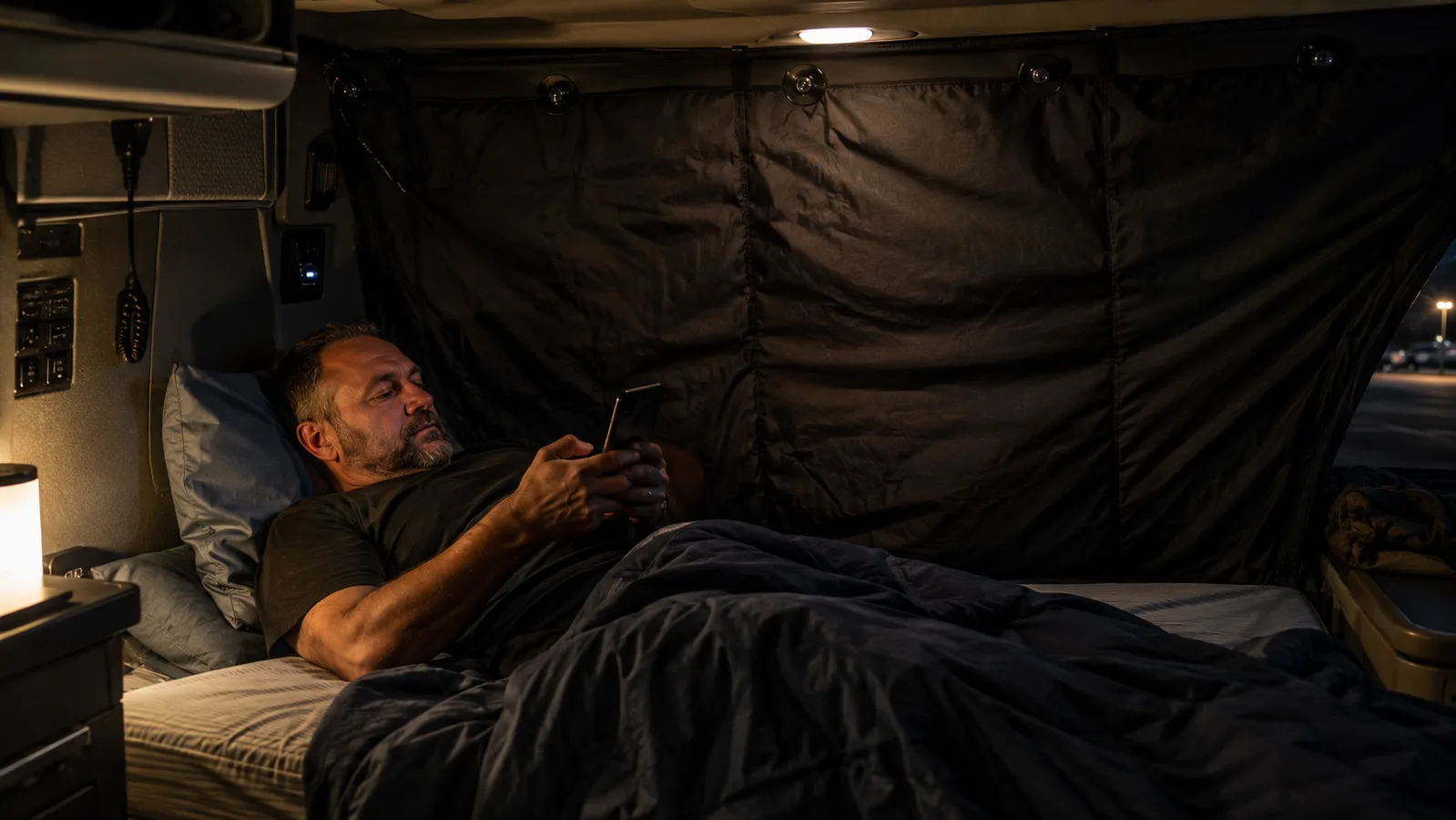
I've parked in enough truck stops to know darkness is never guaranteed. Pilot lot lights bolted forty feet up, aimed straight into a sleeper cab. A Flying J with a digital reader board flashing all night two rows over. Or three in the afternoon and I'm trying to get my required rest with the sun coming in sideways off curved glass that no factory visor or clip-on shade was ever built to cover. A truck cab window is not a bedroom window, and treating it like one is how you end up staring at the headliner instead of sleeping.
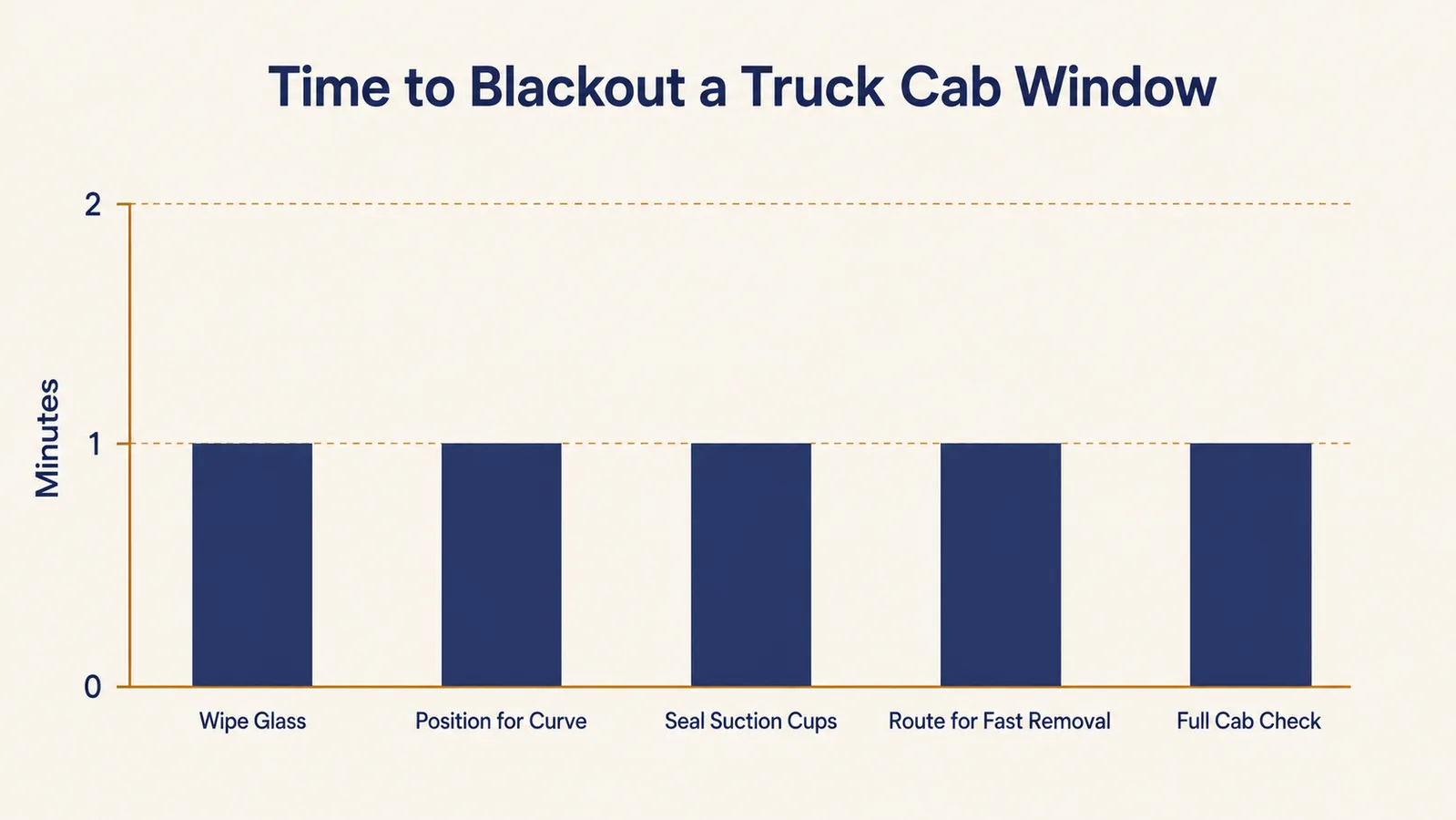
What actually fixed this for me is a portable blackout shade I keep folded behind the passenger seat, the DREAM ART Anywhere Portable Blackout Curtain. It's marketed for nurseries and travel, not trucking, but the size, 51 by 71 inches, is generous enough to cover a windshield or a full side window with slack to spare, and the adjustable suction cups mean I'm not taping anything to the glass or drilling into the headliner. It's budget-friendly and folds down small enough to live in a door pocket. Here's the exact routine I use to get a cab window fully blacked out in about five minutes, cold mornings included.
Before this, I went through a stack of cheap flat curtains that never touched a curved window right and a couple of static-cling shades that fell off the first time the cab cooled down overnight. If you've had the same experience, the fix isn't a better curtain rod, it's a shade built to grip glass directly, no hardware required.
My wife noticed the same DREAM ART shade folded in my truck bag one weekend home and asked why I hadn't just bought two, one for the cab and one for our son's room, since the windows in his room let in the same streetlight glow I deal with in a parking lot. Turns out the same routine that works on curved cab glass works even faster on a flat house window, which tells you something about how forgiving the setup actually is.
Stop Losing Sleep to Somebody Else's Security Light
The DREAM ART Anywhere Portable Blackout Curtain sets up on suction cups in a few minutes and folds down small enough to live behind your seat. No drilling, no tape, no residue on the glass.
Amazon Check Today's Price on Amazon →Step 1: Clean and Dry the Glass First, Even When It Looks Fine
A cab window sweats overnight. Body heat, breath, a cracked window for airflow, all of it leaves a film you can't always see in cab light. Suction cups don't hold on a damp or dusty surface, they'll grip for ten minutes and then let go right when you're finally asleep. So before anything else, I wipe the glass down with a dry microfiber cloth, corner to corner, even if I did the exact same thing the night before.
I keep that rag in the door pocket specifically for this, nowhere else, so I'm never digging through a duffel bag half asleep. Thirty seconds of wiping is the difference between a blackout curtain that stays up through a full 10-hour reset and one that's puddled on the dash by 4 a.m.
If you run a bunk heater to stay warm, condensation gets worse, not better, so check the glass a second time right before you press the suction cups on rather than trusting a wipe-down from an hour earlier. No rag handy, a clean paper towel from the truck stop works fine in a pinch, just make sure the glass is bone dry, not just clear-looking.
A lot of drivers try to skip this step because it feels like fussing over nothing, but it's the single most common reason a blackout curtain fails its first night. Glass that looks dry under a dome light can still have enough moisture on it to beat a suction cup, so when in doubt, wipe it anyway. It costs you nothing and it saves you from waking up at 3 a.m. to a curtain sagging in your lap.
Step 2: Work With the Curve, Not Against It
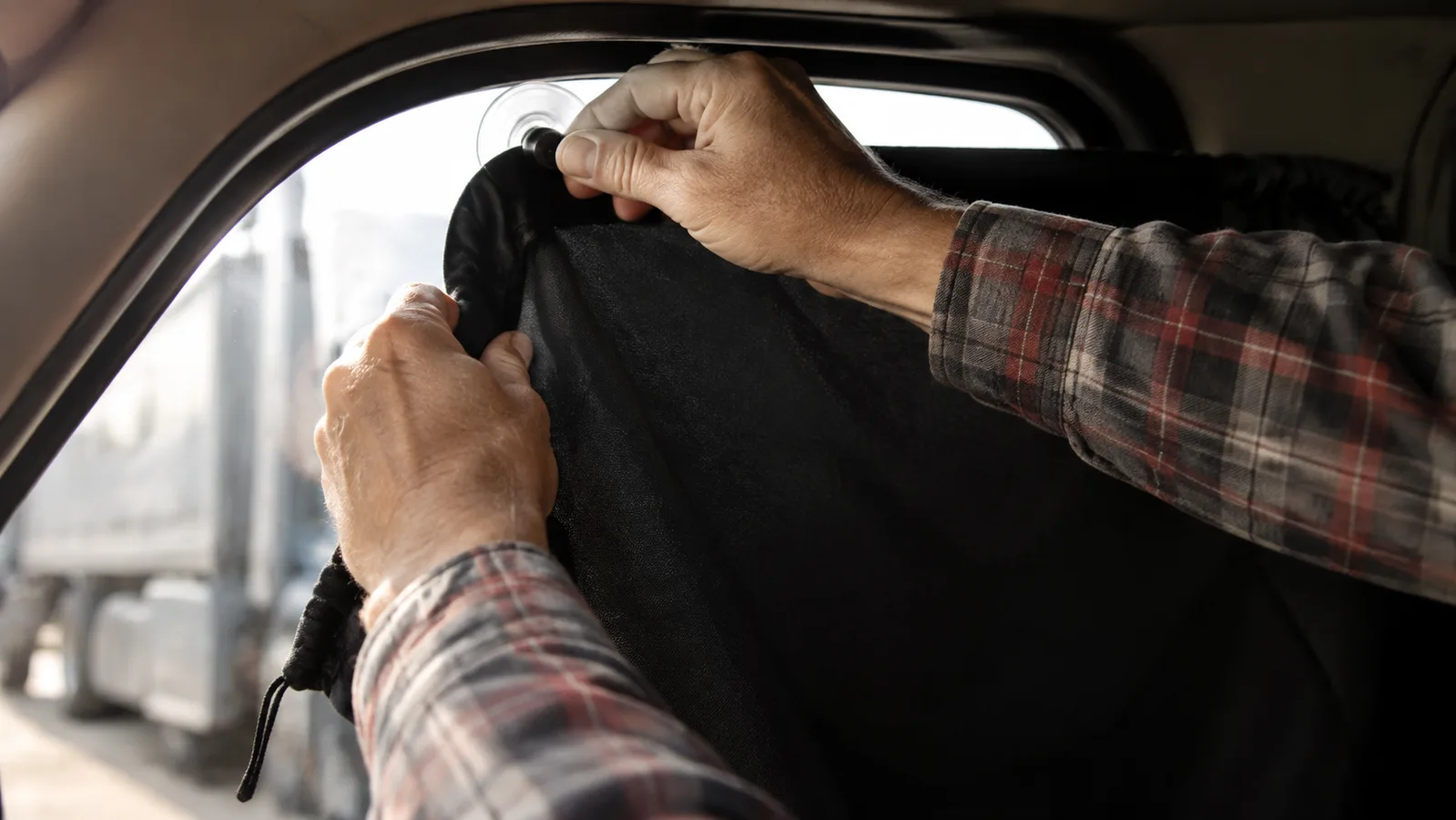
Cab glass curves more than most bedroom windows, especially the windshield and the corners of the side glass. A flat panel of fabric wants to bow and pull away from the middle of the pane, which is exactly where a lot beam finds its way through. The adjustable straps on this blackout shade let you cinch each corner independently instead of relying on one flat sheet, so start at the top corners near the visor mounts and work your way down, letting the fabric bow slightly inward to match the glass rather than fighting it flat.
On a more curved windshield I space the suction cups tighter, four to six inches apart along the top edge, versus a flatter side window where two per side usually holds a full blackout curtain in place through the night.
Every cab is a little different. A Freightliner windshield curves differently than a Kenworth or Peterbilt, and I've had to adjust the drawstring corners tighter on some trucks than others just to get a flat blackout curtain to sit flush instead of tenting out in the middle where it's easiest for light to sneak through.
Step 3: Get the Suction Cups to Actually Hold in the Cold
Cold plastic doesn't seal like warm plastic does, and this is the single biggest failure point drivers run into once the weather turns. A suction cup pressed onto ice-cold glass in a January parking lot will look seated and then pop loose two hours later when the cab temperature swings. I warm each cup in my palm for a few seconds before pressing it on, or I run the cab heat for a minute first so the glass and the cup are closer to the same temperature.
Press firm, hold a five count, then give it a light tug to test the seal before you walk away from it. If a cup keeps failing in the same spot, don't fight it, move it an inch to a fresh contact point on the glass. A blackout curtain that half-falls at 3 a.m. is worse than no shade at all, because now you're up fixing it instead of asleep.
Running mountain routes in the winter, I stopped storing the DREAM ART shade in an outside tool box for exactly this reason, an ice-cold cup has no chance against ice-cold glass. Keeping it inside the cab, even just tossed on the dash during the day, means it's already close to cab temperature by the time I actually need to seal it against the window that night.
Step 4: Leave Yourself a Fast Way Out, Literally
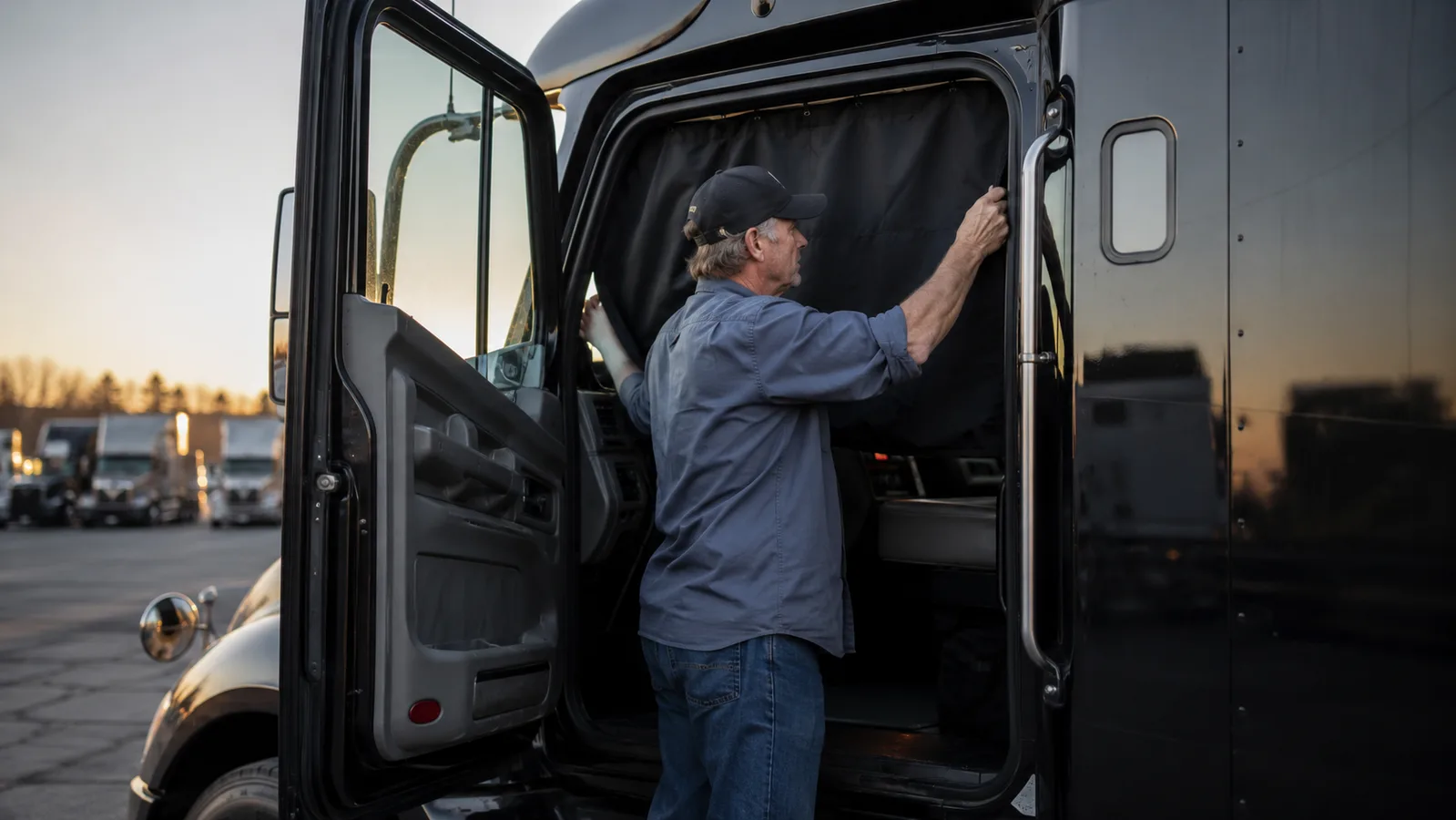
This part is not optional. A blackout shade on the windshield or the driver's side window comes down completely before the truck moves, every single time, no exceptions. These are for parked sleep, not for driving with reduced visibility, and I've never once regretted taking the extra ten seconds to pull it down before starting the engine.
Practically, that means routing the shade so your hand finds it first thing when an alarm goes off or someone knocks. I fold mine toward the driver's door pocket rather than jamming it up on the dash, so removing it is one motion, not a search. If you're new to this, practice pulling it down once in the dark before you actually need to, so it's muscle memory and not a fumble.
This matters just as much for your own safety as anyone else's. A dark, obstructed windshield at a weigh station or a knock from a lot attendant is a bad way to start a shift, and a truck that pulls forward even a few feet with a blackout curtain still up is a real hazard, not a minor oversight. Treat removal as part of starting the truck, not an afterthought you'll get to eventually.
I've made it a habit to say this part out loud to newer drivers who ask about my setup: a blackout shade is for parked hours only, full stop. It's not a tint, it's not a privacy screen for driving through a rest area, it comes down the second your feet are back on the pedals. Anyone selling you on leaving one up while rolling is selling you a bad idea.
Step 5: Build the Full Blackout, Not Just One Window
One covered window is rarely enough. Light sneaks in through the side glass while the windshield stays bare, or it leaks around the door seam where the frame doesn't quite meet the headliner. My full routine covers the windshield with the main blackout curtain, then folds a section of the same shade over to catch the driver's side window, since 51 inches of width gives enough slack to do both without buying a second one. A rolled-up shirt or a visor clip handles the thin gap along the door frame that no shade is shaped to cover.
The last step of the routine happens before you drive away, not before you sleep: a literal walk-around, remove every shade, every suction cup, off every window. I treat it the same as a pre-trip inspection. It takes thirty seconds and it means you're never pulling out of a lot with even a corner of blackout curtain still clinging to the glass.
I fold the whole routine into my regular pre-trip checklist now, lights, tires, straps, and then the windows. It sounds like overkill until you've had a DOT officer ask why there's still a curtain suction-cupped to your windshield at a scale, which is a conversation nobody needs to have twice.
What Else Helps
A blackout shade handles the light, but light was never the only thing keeping me up in a lot at noon. Pair it with something for the noise, idling reefer units and slamming trailer doors don't care what time it is either, and if you're a light sleeper even with the cab fully dark, a weighted sleep mask closes the last few gaps around your own eyes for the ride home or a hotel room with thin curtains. I go through both the honest case for this exact shade and a full year of using one at portable-blackout-shade-review-long-term, and if you want the short version of why a suction-cup blackout shade beats fighting with regular curtains in a cab, that's laid out at 10-reasons-portable-blackout-shades-help-you-sleep.
None of this replaces good judgment about where you park. A well-lit lot near the fuel island is safer than a dark corner, even if it's harder to sleep in, so the goal of a portable blackout curtain was never to hide the truck, just to give you control over how much of that light actually reaches your eyes once you've picked a spot.
Wash it occasionally too. Suction cups pick up road dust just like the glass does, and a grimy cup won't seal as well as a clean one. A quick wipe with a damp cloth every few weeks keeps the whole setup working the way it did the first night, whether it's living behind a truck seat or folded in a closet at home.
The shade doesn't care what time your body thinks it is. It just makes the cab as dark as 2 a.m., whenever you actually need it to be.
Five Minutes of Setup Buys You a Full Reset
If your sleep schedule doesn't match the sun, a portable blackout curtain is the cheapest fix that travels with you. Suction cups on, curtain down, done.
Amazon Check Today's Price on Amazon →