

I've spent nineteen years driving a truck seat that never once fit the shape of my own spine. Every OEM seat is built for an average driver who doesn't exist, and by hour six of a long haul, my lower back would ache in that same tight spot right above my belt line. I tried the folded jacket behind my back trick, a rolled up towel wedged in there, even sitting on a wallet like my dad used to joke about doing. None of it held its shape past the first stretch of rough pavement. What actually changed things for me was learning to set up a lumbar support pillow correctly, not just tossing one behind me and hoping for the best.
I want to be straight with you before we go any further. This isn't a promise that a cushion is going to fix a bad back. It won't, and anyone telling you otherwise is selling you something they can't back up. What a properly placed lumbar support pillow does is give the natural curve of your lower spine something to lean into, instead of letting it collapse backward against a flat seat for eight, ten, or twelve hours at a stretch. I run an Everlasting Comfort lumbar support pillow in my own truck now, and the difference between having it in the wrong spot and having it in the right spot is bigger than most drivers expect. Here's exactly how I set mine up, step by step, plus where I've watched other guys get it wrong at truck stops.
A quick note on why I'm writing this the way I am. I've read a few of the drivers' forum threads on lumbar support pillows over the years, and half of them treat a cushion like it's some kind of cure. It isn't a cure. It's a positioning tool. Get the positioning wrong and you'll swear the thing does nothing, then blame the pillow instead of the setup. Get it right and you'll wonder why you waited so long.
Your seat back has been arguing with your spine for years. Here's the cushion that finally stops the fight.
The Everlasting Comfort memory foam lumbar support pillow holds its shape through a full shift instead of going flat by lunch. Over 37,000 drivers, office workers, and road warriors have rated it, and it straps directly to a seat frame so it stops sliding around under you.
Amazon Check Today's Price on Amazon →Step 1: Set the Seat Back Angle Before You Touch the Pillow
Before you place a lumbar support pillow anywhere, get the seat back angle right, because the angle decides whether the pillow can even do its job. In my International, I run the seat back around one hundred to one hundred ten degrees, not bolt upright and not reclined flat. Bolt upright squeezes a lumbar pillow flat against your tailbone before you've gone ten miles. Reclined too far, the pillow slides down toward the seat cushion and you end up supporting nothing but empty air.
Sit all the way back into the seat first, with your hips touching the seat back, before you add anything behind you. Feel where your own low back naturally wants to curve. That's the gap you're about to fill, not a spot you're guessing at. A lot of drivers skip this and just cram a pillow in wherever there's slack in the seat, which is exactly how a good lumbar support pillow ends up doing nothing.
If your seat has an air suspension adjustment, set that firmness before you start on the angle, not after. A seat that's bouncing soft under you changes how far back you sink with every bump, and that shifts the angle you just dialed in. I set the suspension first, the recline angle second, and the lumbar support pillow last, in that order, every single time I get in a truck I haven't driven before.
Step 2: Find Where Your Curve Actually Sits, Then Match the Pillow to It
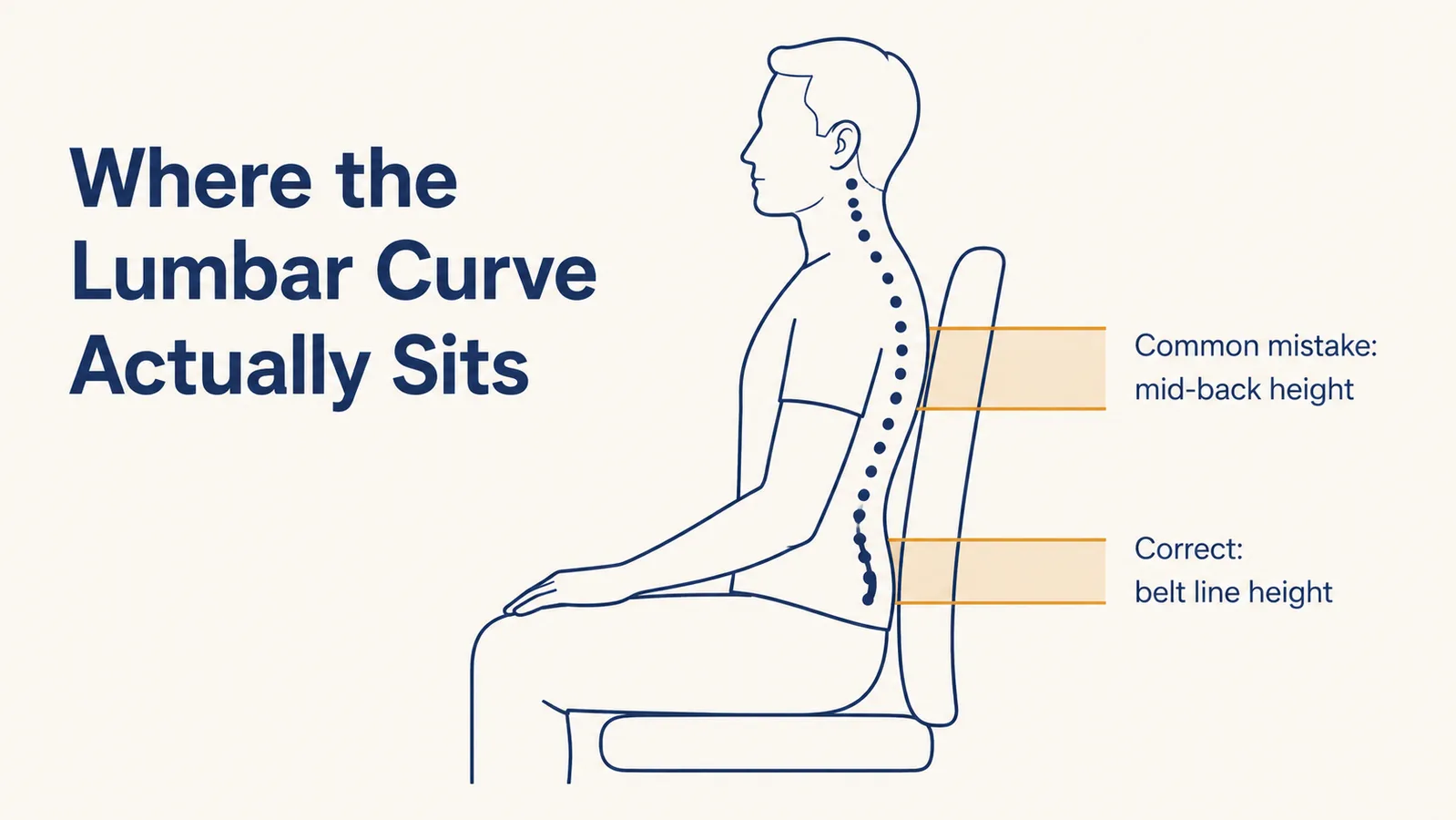
The lumbar curve sits low, roughly at belt line height, not up near your shoulder blades. This is the single most common mistake I see with a lumbar support pillow. Drivers place it too high because that's where the ache seems to radiate to by the end of a shift, but the ache up high is usually a symptom of a collapsed low back, not the actual source.
Here's how I find it every time I get in the truck. Reach one hand behind your lower back and feel for the small hollow just above your belt line, where your spine naturally curves inward instead of running flat. That hollow is your target. The center of the lumbar support pillow should sit right there, not two or three inches higher.
Torso length varies a lot between drivers, so don't assume the exact placement that works for me will land in the same spot for you. Shorter torso, the curve tends to sit a little lower. Longer torso, it can sit an inch or two higher. Adjust by feel, not by a fixed measurement, and check it again after the first week, because your body will tell you if it's off.
One trick that helped me dial this in faster: adjust the pillow while parked, then drive a short stretch and reassess before committing to it for a full shift. The ache that shows up after twenty minutes of actual driving tells you more than however it feels sitting still in a parking lot.
Step 3: Anchor It So It Doesn't Walk Down the Seat Over a Shift
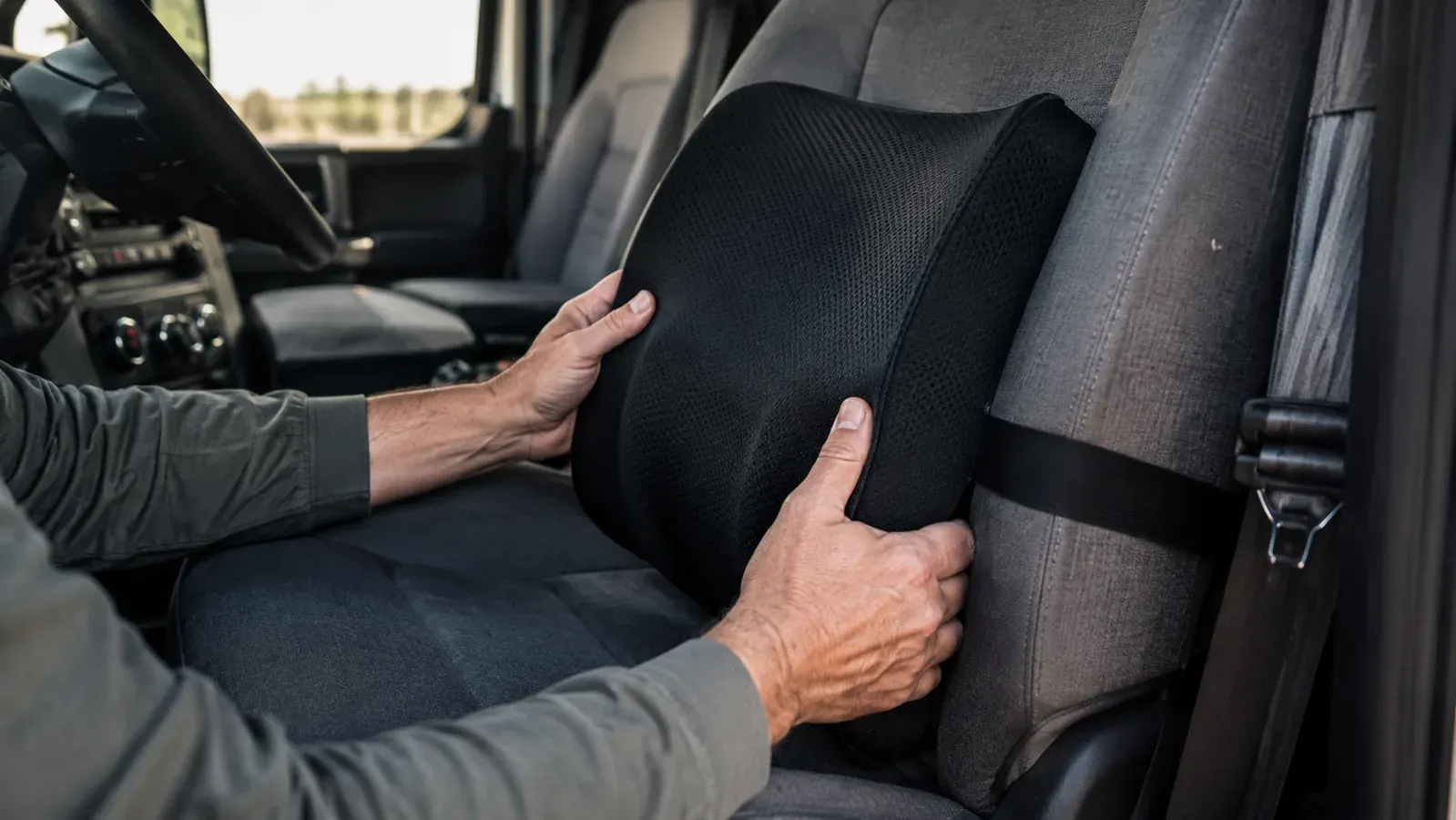
A lumbar support pillow that isn't secured will migrate. Every time you shift your weight, brake, or lean to check a mirror, an unsecured pillow drops half an inch, and by hour four it's sitting at your tailbone instead of your low back. Use the strap that comes with it and cinch it around the seat frame itself, not just around the headrest post or a seam in the upholstery.
I used to just wedge mine in loose, and by the third hour of a run it had slid down and I didn't even notice until my low back started aching again. Strapping it to the frame fixed that completely. It stays exactly where I set it through a full day of shifting, braking, and climbing in and out at fuel stops.
Get in the habit of checking the strap tension whenever you stop for fuel or a load check. It takes five seconds and it's the difference between a lumbar support pillow that works all day and one that's only doing its job for the first ninety minutes.
Cab temperature plays into this more than people expect. A memory foam lumbar support pillow that's been sitting in a hot cab all afternoon in July goes softer and compresses faster than the same pillow on a cold January morning, when the foam takes a few minutes to warm up and flex the way it's supposed to. I check the strap and the shape of the pillow itself at the start of a shift in both extremes, since a cushion that held its curve fine yesterday can behave differently after baking in a parked truck all day.
Step 4: Rebuild the Rest of Your Driving Posture Around It
A lumbar support pillow can't do its job in isolation. Seat depth matters too. Adjust the seat so your knees have a slight bend when your foot is on the pedal, not locked straight and not jammed up under the wheel. Sitting too far forward flattens your low back curve no matter how well the pillow is positioned, because your hips end up rotated forward and the pillow can't reach the spot it needs to.
Check your shoulder position against the headrest while you're at it. If you're leaning forward off the seat back to see the mirrors or the gauges better, you're pulling your low back away from the lumbar support pillow every single mile, which defeats the entire point of having it in there.
This is the step most guys skip, because it feels like extra fuss for something that seems unrelated to a back cushion. It isn't unrelated. Seat depth, wheel distance, and pillow placement all work together, and getting one wrong undoes the other two. I've sat in trucks where the driver had a perfectly good lumbar support pillow doing nothing at all, simply because his seat was six inches too close to the wheel.

Step 5: Build Movement Breaks Into the Shift, Not Just the Pillow
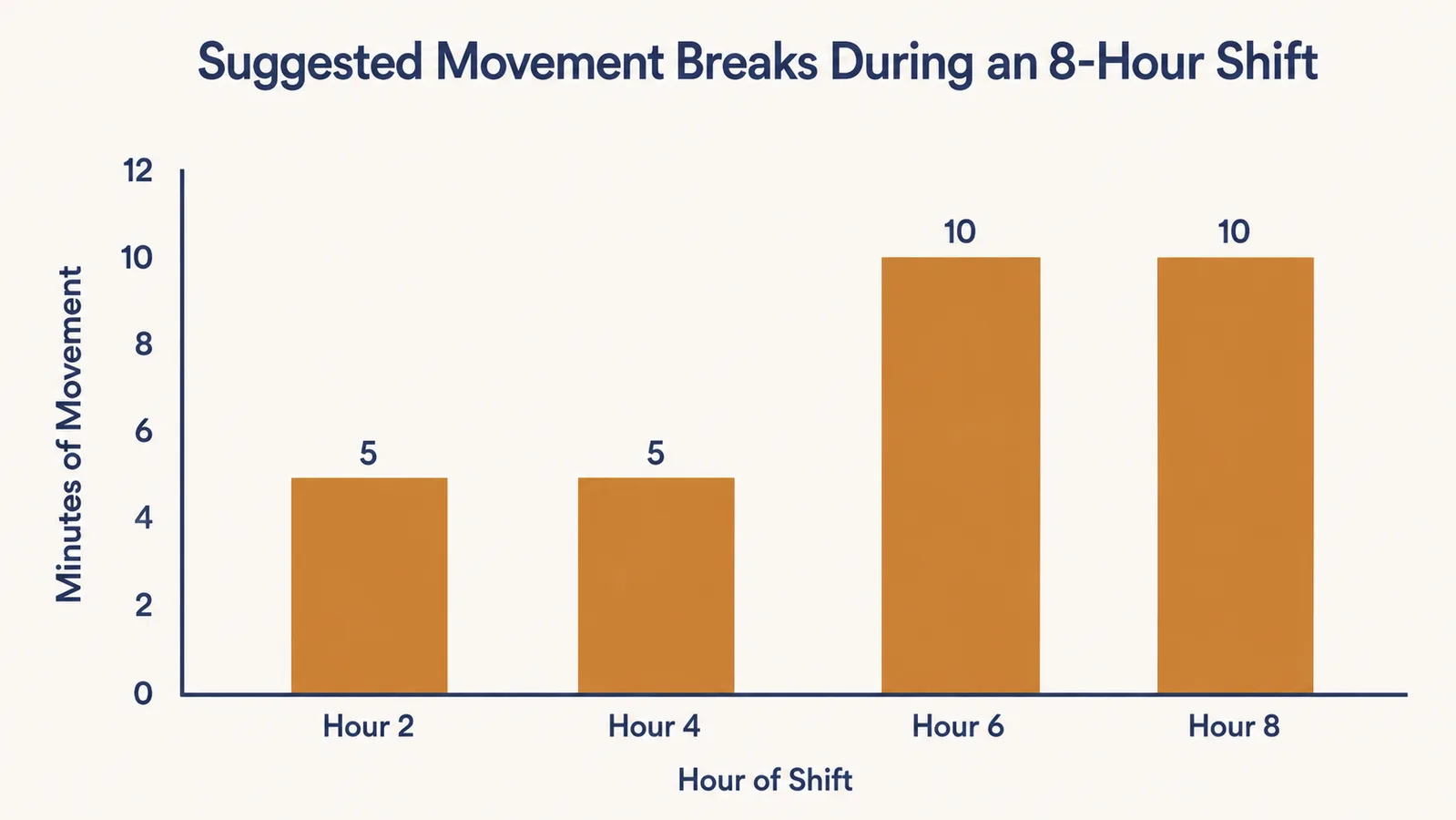
No cushion, no matter how good, replaces getting out of the seat. I plan movement breaks the same way I plan fuel stops, on a schedule instead of waiting until my back is already locking up. Roughly every two hours, I get out, stand up straight, and walk a lap around the truck before I get back in.
The chart below is close to what I actually run through a shift. Shorter breaks earlier, longer ones as the hours stack up. Standing tall for a minute, walking, and stretching the front of your hips undoes some of the forward hip tilt that builds up from sitting, and a lumbar support pillow works better when you give your spine that reset instead of asking it to hold one position for twelve straight hours.
Drivers on tight schedules push these breaks off because it feels like lost time. In my experience it's the opposite. A five minute break at hour two saves me from a ten minute break at hour six just to walk off a back that's already seized up, and it keeps the lumbar support pillow doing useful work instead of propping up a spine that's already given up for the day.
What Else Helps
A lumbar support pillow handles the low back curve, but it isn't the whole picture. A decent seat cushion under you matters just as much if the seat pan itself is worn thin. What you're sleeping on in the sleeper berth or at home matters too, since a bad mattress undoes a lot of the good a lumbar pillow does during the day. Staying hydrated and wearing shoes with real support under the pedal foot both make a bigger difference than people expect.
Noise and light matter more to this than most drivers connect to their back. A cab that's too bright or too loud to actually rest in during a mandated break means you skip the break, or cut it short, and skip the one thing that resets your posture better than any cushion can. If your rest periods are getting interrupted by cab light or engine noise instead of actual sleep, that's worth solving on its own, because a tired driver slouches harder into a lumbar support pillow than a rested one does, and slouching is exactly what the pillow is fighting against.
If you want a broader rundown of why a lumbar support pillow helps in the first place, not just how to set one up, I laid out the reasoning in more detail in 10 reasons a lumbar support pillow can help with back pain. Worth a read if you're still deciding whether it's the right tool for your situation.
I'll say this plainly because it matters more than any product recommendation in this guide. None of this replaces a doctor's opinion, and nothing here is medical advice. A lumbar support pillow is a comfort and positioning tool, not a treatment for an underlying condition. If your back pain keeps getting worse over days or weeks instead of easing off, or if you notice numbness, tingling, or weakness running down a leg, that is not something a cushion is going to sort out. See a doctor before you keep adjusting gear around the problem.
A lumbar support pillow doesn't fix your back. It just stops your seat from making the next eight hours worse.
Set it up right once and stop fighting your seat every shift.
The Everlasting Comfort lumbar support pillow straps to the seat frame, holds its shape through a full day, and works in a truck seat, a desk chair, or the couch at home. See today's price and current availability on Amazon.
Amazon Check Today's Price on Amazon →