

Nineteen years of parking in truck stop lots and I still remember the first night a reefer unit two spots over ran all night long, right at bunk-window height. I didn't sleep more than ninety minutes at a stretch. That was long before I ever tried sleep earbuds, and it's the exact problem they're built for. This guide walks through the routine I actually use with a pair of sunvito sleep earbuds, the small silicone kind built for side sleepers, so you get the quiet without losing the ability to hear what actually matters.
I want to say this plainly before anything else. Sleep earbuds are for noise you don't need to hear, not noise you do. An idling engine, a neighbor's generator, road noise through a thin cab wall, that's fair game. A smoke alarm, a knock on your door, another driver hollering that your reefer alarm is going off, that's not something any pair of earbuds should be allowed to bury. Everything below is built around that line, not around it. If you only take one thing from this article, take the alarm setup in Step 4 as seriously as the noise blocking itself.
I use the same routine at home outside Knoxville, where the noise is different but the stakes around hearing an alarm are exactly the same. Donna and I have two kids in the house, and a smoke detector going off or one of the kids calling out at 2 a.m. matters just as much there as a knock on my sleeper door does out on the road. So this isn't only a cab routine. It's the same five steps whether you're parked at a truck stop or asleep in your own bed.
The quiet only works if the seal is right
The sunvito sleep earbuds are built low profile enough to sleep on your side without digging into your ear, which is the whole reason they work for a bunk instead of a bed. Check today's price on Amazon and see the current tip sizes included.
Amazon Check Today's Price on Amazon →Step 1: Pick your parking spot before you plug anything in
Sleep earbuds are a second layer, not a replacement for parking smart, and skipping this step means you're fighting a losing battle before your head hits the pillow. Reefer units are the worst offenders in most lots because they run continuously and the compressor cycles hit a low frequency that carries through cab walls better than road noise ever does. When I pull in for the night I do a slow loop of the lot before I pick a spot, and I specifically avoid rows next to trailers with visible reefer units, anything near the truck wash bay, and spots downwind of the generator row if the lot has one.
If the lot is full and I can't avoid a reefer neighbor entirely, I try to angle my cab so my bunk window faces away from the unit rather than toward it. It sounds like a small thing, but a few feet and a wall between you and the compressor makes a real difference before you've even put anything in your ears. I've also learned to check for idling lanes near fuel islands, since drivers topping off at 3 a.m. tend to leave engines running longer than you'd expect.
A few truck stop apps let drivers rate lots by noise level now, and I check those before I pull off the highway if I'm unfamiliar with a location. It's not perfect information, since noise depends on who pulls in after you, but it beats guessing blind. Combine that with arriving early enough to have your pick of rows rather than taking whatever's left after dark, and you've already cut your odds of ending up next to a reefer unit before you've touched the earbuds at all.
None of this replaces the earbuds. It just means the earbuds aren't doing all the work by themselves, which matters because no pair of sleep earbuds is going to fully cancel a compressor running twelve feet from your head. Give yourself the best starting point you can, then let the earbuds handle what's left.
Step 2: Get the seal right before you worry about volume
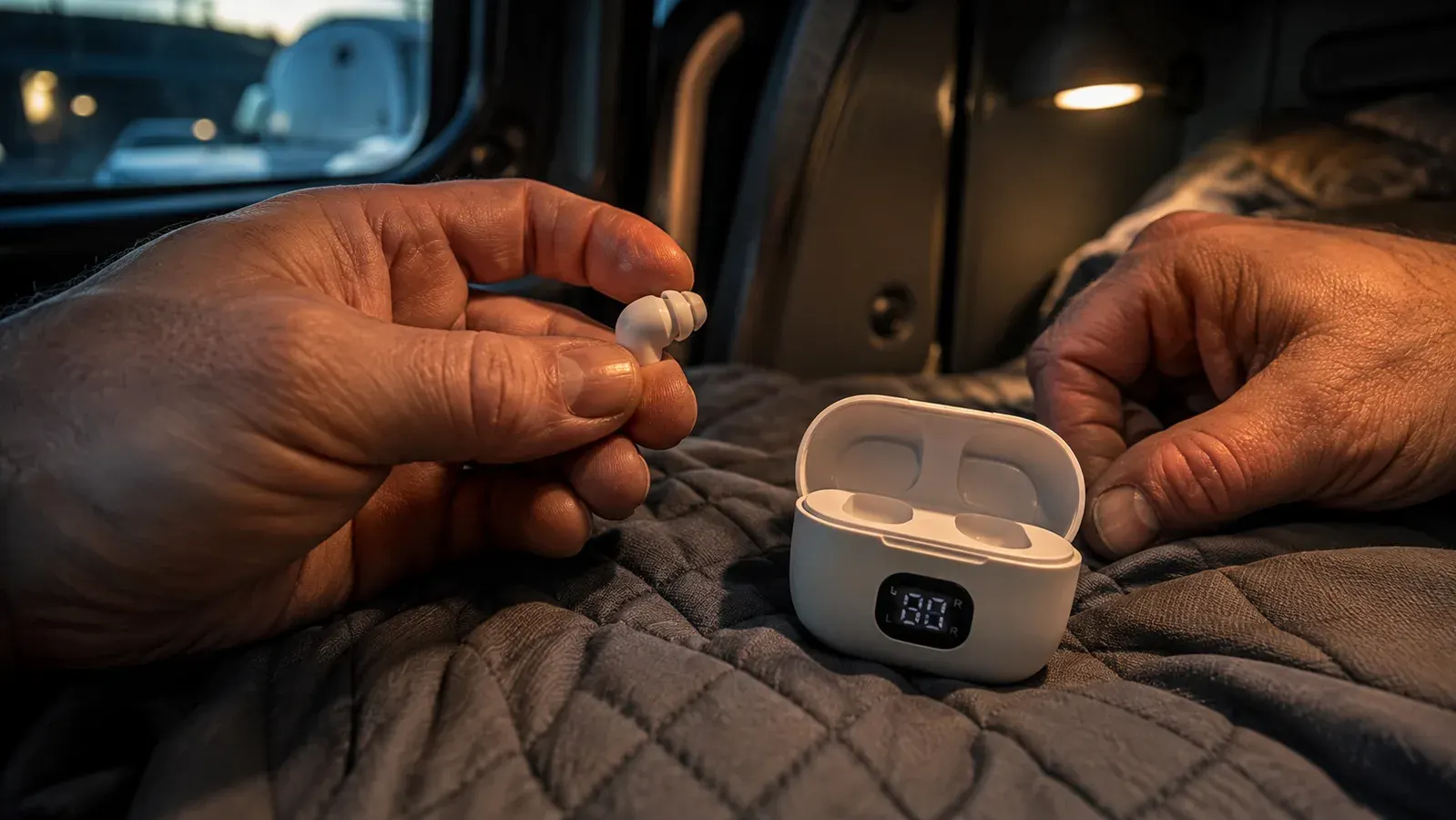
Most of the noise blocking a pair of sleep earbuds gives you doesn't come from any electronics at all. It comes from the silicone actually sealing your ear canal, the same way foam plugs work. If the tip is too small, you'll hear a whistling edge of outside noise no matter what you're playing. If it's too big, it won't seat right and you'll be reaching up to adjust it every twenty minutes, which defeats the purpose for anyone trying to actually fall asleep.
The sunvito sleep earbuds come with a small run of tip sizes for exactly this reason, since ears vary a lot more than people expect and they're built small enough for side sleepers in the first place. I go through each size lying on my side, the position I actually sleep in, not standing in front of a mirror. Press the earbud in gently, jaw relaxed, and do a rough seal test by cupping a hand over your ear afterward. If cupping your hand makes a noticeable difference in what you hear, the seal isn't there yet and you need a different tip size.
Once you find the right size, mark it somehow, a dot of nail polish on the case slot works fine, so you're not re-testing every single night. A good seal on a small earbud beats a mediocre seal on a bigger one every time, and it's the difference between these actually disappearing while you sleep and you fighting them all night.
Step 3: Choose what you play, and keep the volume where it belongs
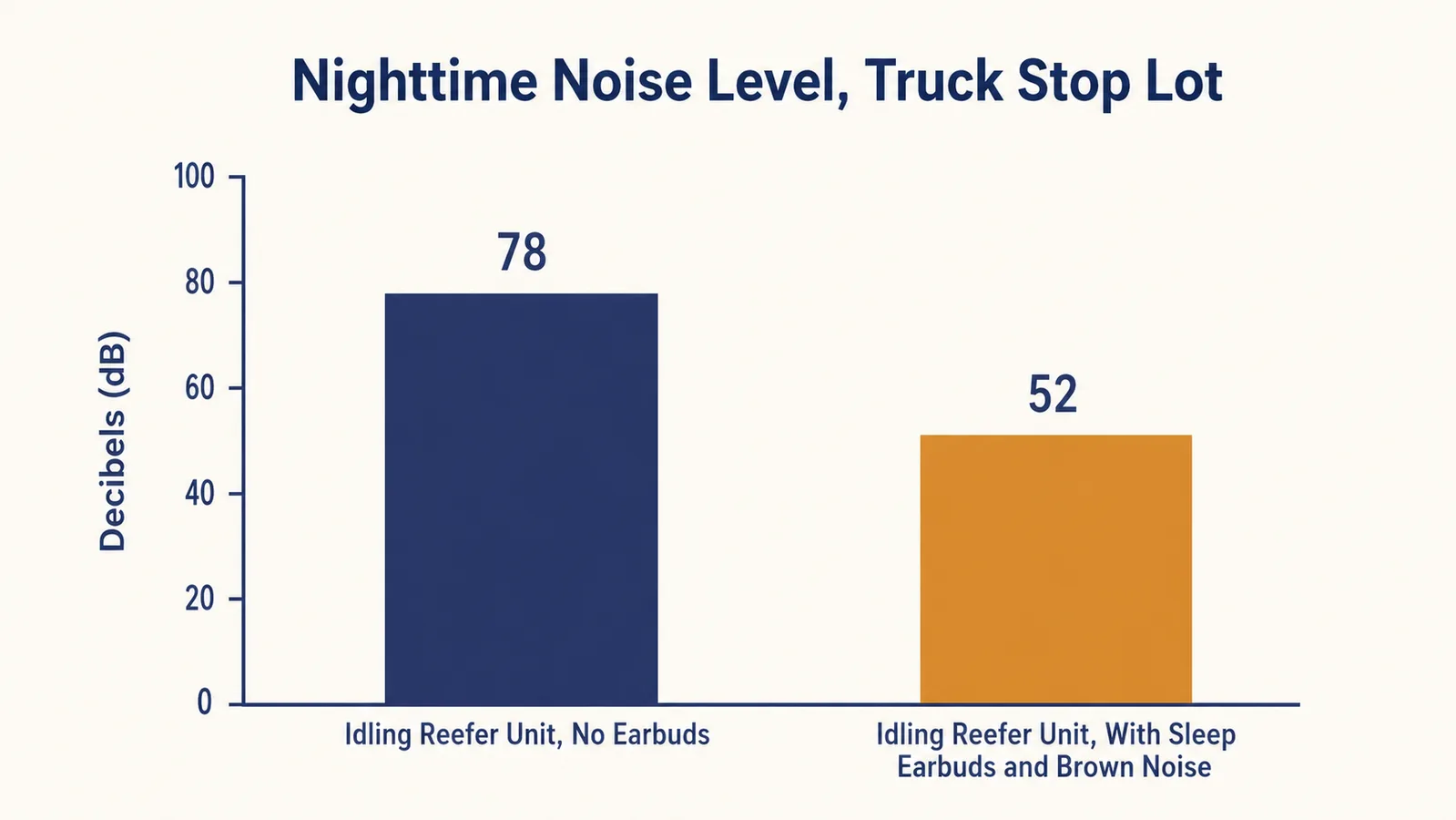
There's a real debate among drivers over brown noise versus dead silence, and honestly it comes down to what kind of noise you're fighting. Brown noise, the deeper, rumblier cousin of white noise, works better against a steady idling engine because it sits in a similar low frequency range and masks the compressor cycling instead of leaving gaps where it pokes through. Straight silence works fine in a quiet lot, but against a reefer neighbor I almost always reach for brown noise instead, since silence alone leaves that low hum with nothing covering it.
Whatever you choose, keep the volume low. This isn't a comfort suggestion, it's a hearing protection one. You're wearing these for six to eight hours at a stretch, night after night, and sustained volume that would be perfectly fine for a thirty-minute podcast can add up to real hearing strain over a year of nightly use. I set mine at a level where the engine noise is muffled to a background hum, not fully silent, and I never touch the volume past what I'd call conversational level. If you find yourself creeping the volume up every few nights to cover the same noise, that's usually a seal problem from Step 2, not a volume problem.
Most phones now have a built-in volume limit you can set in the sound settings, and I turn that on specifically for nighttime use so a stray tap or an app defaulting to full volume can't spike things while I'm half asleep. I also test the sunvito's Bluetooth 6.0 connection for range and drop-outs in whatever bunk or bedroom I'm using that night, since an earbud that disconnects and reconnects at full volume through the phone speaker instead is a rude way to wake up.
Step 4: Set a backup alarm you can actually feel
This is the step that matters most, so I'm not going to soften it. Once a pair of sleep earbuds is doing its job well and you're properly sealed off from engine noise, you have also sealed yourself off from a lot of other things you need to hear. A smoke detector. Someone knocking on your door. A CB call about a problem with your rig. Even your own phone alarm, if the volume and placement aren't set up right. I never wear these while driving, full stop, and in a lot of places doing that is against the law anyway. They're for parked, sleeping hours only.
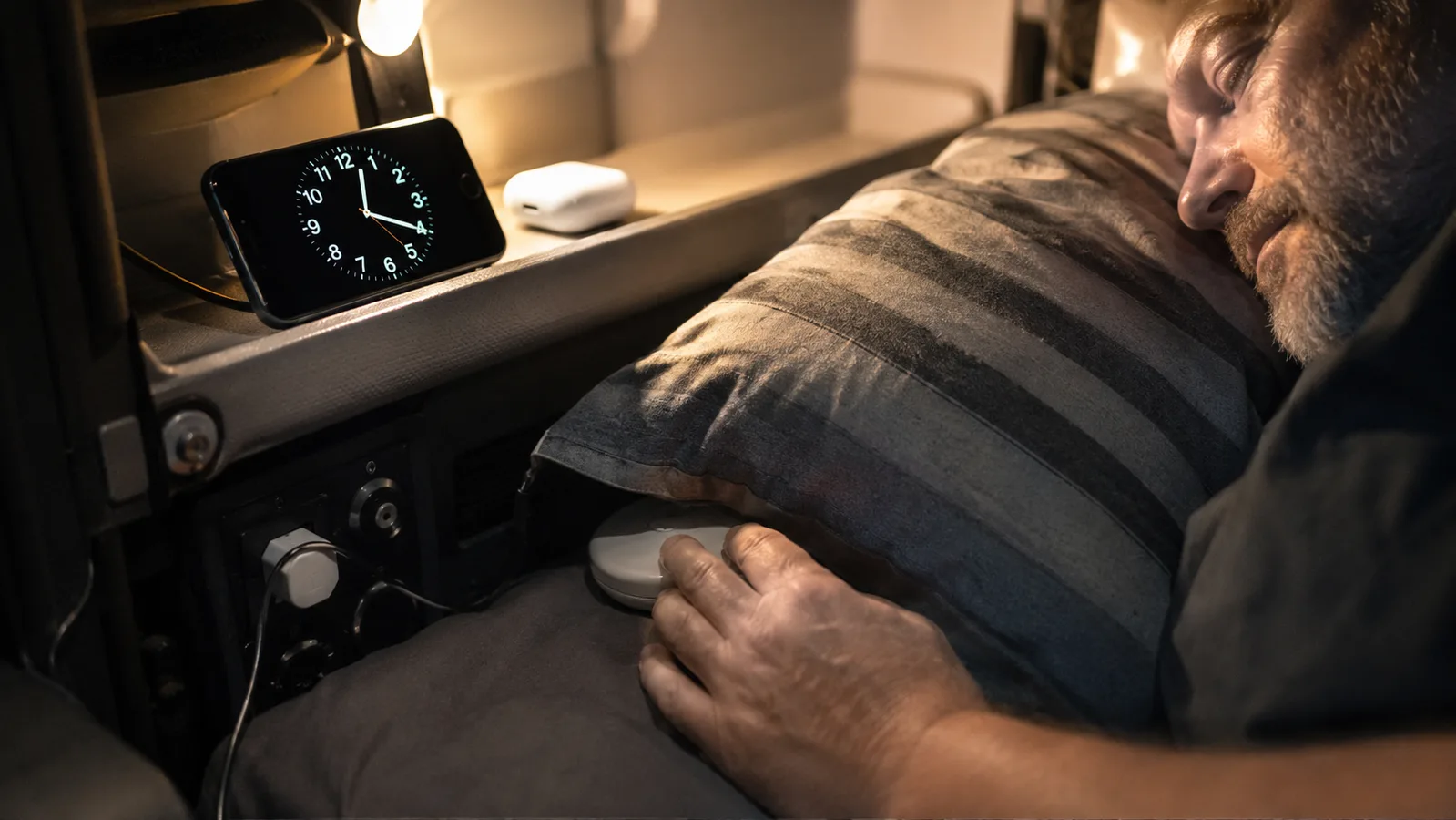
The fix I actually use is a small vibrating alarm clock, the kind made for heavy sleepers, tucked under my pillow corner or against the mattress. It buzzes hard enough to wake me even with the earbuds' brown noise running, and it doesn't depend on me hearing anything at all. I pair that with my phone alarm set to its loudest setting and propped somewhere close, not across the cab, so there are two independent ways to get me up. If your sleep earbuds connect over Bluetooth, like the sunvito's Bluetooth 6.0 connection does, a phone alarm can technically play through them too, but I don't rely on that alone since a dying battery or a dropped connection at 5 a.m. is exactly the kind of failure you don't want on the one thing waking you up.
If you share a bunk or a room, this step doubles as a courtesy conversation. Donna knows that when I've got these in, a hand on my shoulder works faster than my name from across the room, and we worked that out early rather than leaving it to chance. If you're at home with a spouse or kids nearby, have the same conversation before the first night you use them, not after a night where nobody could get your attention.
Step 5: Build a charging and cleaning routine that survives a full week out
A pair of sleep earbuds only works if it's charged, and a dead earbud at 11 p.m. in a truck stop lot isn't a problem you can solve. I keep the charging case plugged into a cab inverter every evening while I'm doing my pre-trip walk-around, so it's a habit tied to something I already do daily rather than something I have to remember on its own. The sunvito case has a small LED display showing remaining charge, which is a genuinely useful detail for a week-long run where you're not near a home outlet and want to know at a glance whether tonight is covered.
Cleaning matters more than most people expect, especially on longer hauls where you're wearing the same tips night after night in a cab that isn't always climate controlled. Wipe the silicone down with a dry microfiber cloth or an alcohol wipe each morning before they go back in the case, and let them air out for a few minutes rather than sealing them straight into the case still slightly damp. If you notice any irritation or a change in fit partway through a long trip, swap to a spare tip if you're carrying one, since a worn or slightly misshapen silicone tip loses its seal well before it looks obviously worn out.
What Else Helps
Sleep earbuds handle the sound, but a few small additions handle the rest of a noisy lot. A window sock or a set of blackout curtains across the bunk window cuts the light from a neighboring truck's running lights or a lot's overhead sodium lamps, and dealing with light separately from sound means neither problem is fighting the other. If you're at home rather than in a cab, a small white noise machine on the nightstand can back up the earbuds on nights when you'd rather not have anything in your ears at all, which is worth having as an option even if the earbuds are your main tool. And however good the noise blocking gets, none of it replaces choosing a quieter spot in the first place when one is actually available. See how these hold up over months of nightly use in the long-term review, or check out why sleep earbuds beat regular earbuds for this kind of use in the first place.
One more thing worth building into the routine long term: give your ears an occasional night off. Wearing anything sealed in your ear canal every single night for months can lead to irritation or wax buildup for some people, and a night with a window sock and brown noise playing through a small speaker instead lets your ears reset without giving up on quiet entirely. It's a small habit, but it's kept me from the ear irritation problems I hear other drivers complain about after a year of nightly use.
A pair of sleep earbuds should quiet the engine, never the alarm. Get that order backwards and the noise was never your real problem.
Start with the earbuds, keep the vibrating alarm as backup
If you want to try this routine yourself, the sunvito sleep earbuds are the pair I walked through above. Check today's price on Amazon before your next trip out.
Amazon Check Today's Price on Amazon →