

Three weeks into running this Everlasting Comfort lumbar pillow in my Peterbilt's air-ride seat, the elastic strap started sliding about two inches lower every time I climbed in and climbed back out. Forty times a shift, easy. That's not something you catch in a review written by somebody who unboxed it, sat in a dining chair for an afternoon, and typed five stars before dinner. You catch it after weeks of the same motion in the same seat, day after day, in a cab that swings forty degrees between a Texas afternoon and a mountain pass at 2 a.m. I've already told the long version of my year with this pillow, but this one is about the parts that only show up after the honeymoon is over.
Everlasting Comfort makes a decent lumbar pillow. Memory foam, molded curve, elastic straps, mesh cover, the kind of thing that looks right in the product photos. What those photos can't show you is what the foam feels like in month four, whether the strap still holds after month six, or whether it even fits the seat you actually have. I run one in my truck seat and a second one in my recliner at home, and between the two of them I've found the spots where this pillow earns its keep and the spots where it quietly lets you down.
The Quick Verdict
Solid shape and real memory foam for the money, but the strap loosens with repeated use and the foam softens more than I expected by month four.
Amazon Check Today's Price →Before You Add This to Cart, Know What Changes After Month Three
Most reviews are written the week the box arrives. This one is written after the strap needed re-cinching and the foam had months of real weight on it. See today's price and decide with the full picture.
Amazon Check Today's Price on Amazon →How I've Actually Used It
I've run this pillow two places for the better part of a year. One lives strapped to my driver's seat, the high-back cloth seat in my Peterbilt, and it rides there for ten and eleven-hour shifts, sometimes longer during a bad week. The second one lives in the recliner in my living room, where my wife uses it more evenings than I do. Two completely different chairs, two completely different postures, and two very different stories about how this pillow holds up. That's the test that actually matters, not a week of sitting at a desk.
In the truck, the pillow gets in and out with me every single stop, which means the strap gets stretched, released, and re-cinched dozens of times a week. At home, it barely moves once it's positioned, since the recliner doesn't change shape and nobody's climbing in and out of it forty times a day. That difference alone explains most of what I'm about to tell you. A lumbar pillow that never moves ages completely differently than one that gets handled constantly.
I marked my calendar the day it arrived and made myself write down one line every few weeks, not a formal log, just a note on my phone about the strap tension, how firm the foam felt when I pressed a thumb into it, and whether either one had shifted position. That habit is the only reason I can tell you specifics instead of a vague impression. Most of what changes with a pillow like this happens slowly enough that you won't notice week to week, you only notice it when you compare week one to week sixteen.
I'm not a physical therapist and I'm not going to tell you this pillow fixes back pain, because that's not how a foam cushion works and anyone who tells you otherwise is selling something. What I can tell you is what changed in the fabric, the foam, and the fit over real months of real use, the stuff that never makes it into a review posted the week the box arrived.
The Strap Problem Nobody Mentions
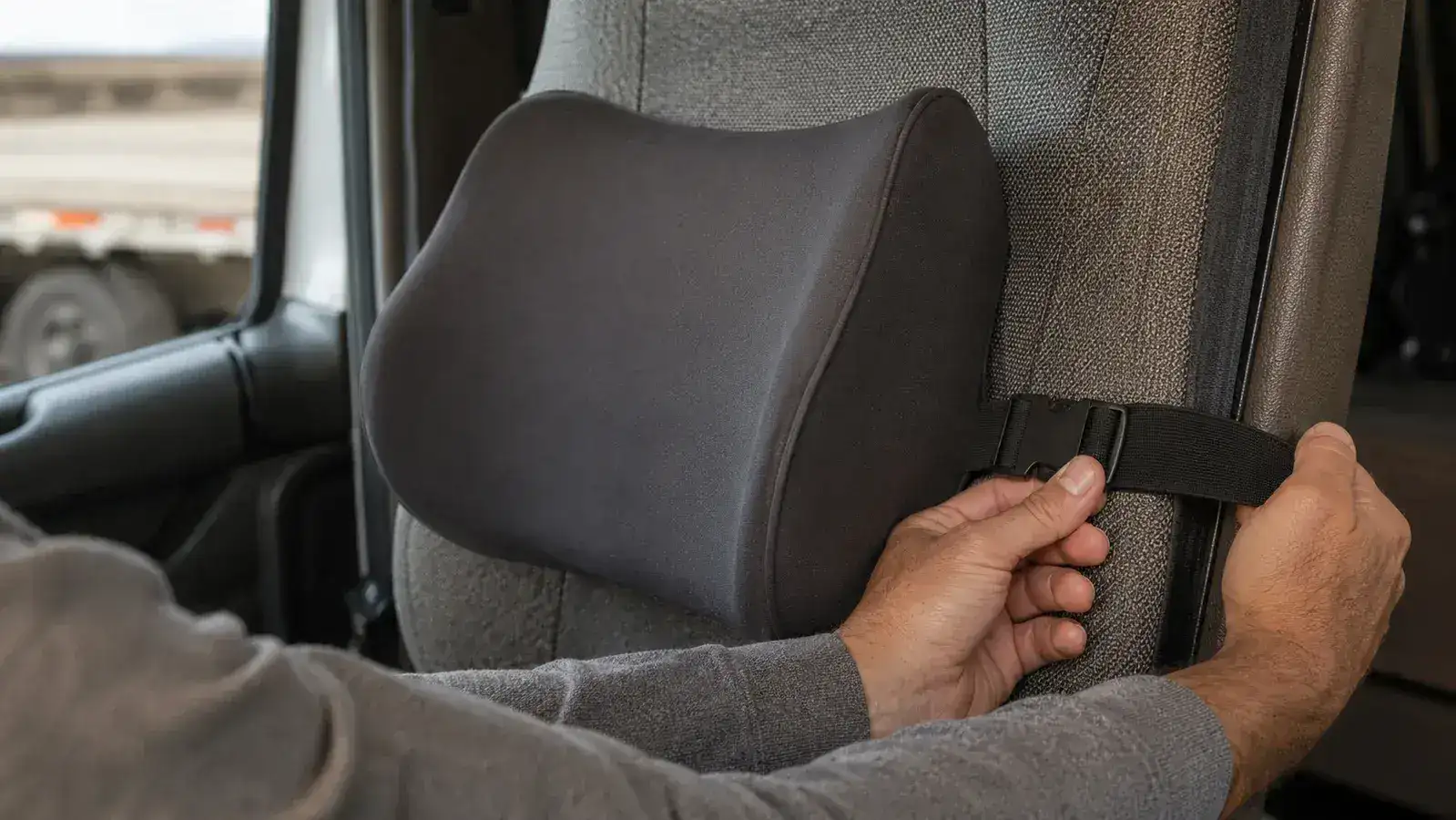
The elastic straps are how this pillow attaches to a seat back, looping around the top of the headrest post or the frame and cinching down with an adjustable buckle. Out of the box, that system holds tight. By week three in my truck seat, I noticed the pillow had slid about two inches lower than where I'd positioned it, landing more on my tailbone than my lower back. By month two, I was re-cinching the strap every few days instead of setting it once and forgetting it. The elastic doesn't snap or tear, it just loses some of its original tension the more times it gets stretched and released, which in a truck seat you're doing every single stop.
The buckle itself never broke on me, which I'll give it credit for. It's a simple plastic slide clasp, the same kind you'd find on a backpack strap, and it held every time I cinched it back down. The problem was never the hardware failing, it was the elastic material losing its snap-back the way an old waistband does after enough washes and stretches. If Everlasting Comfort swapped in a webbing strap with a ratchet buckle instead of pure elastic, this complaint would probably disappear, but that's not the pillow they sell.
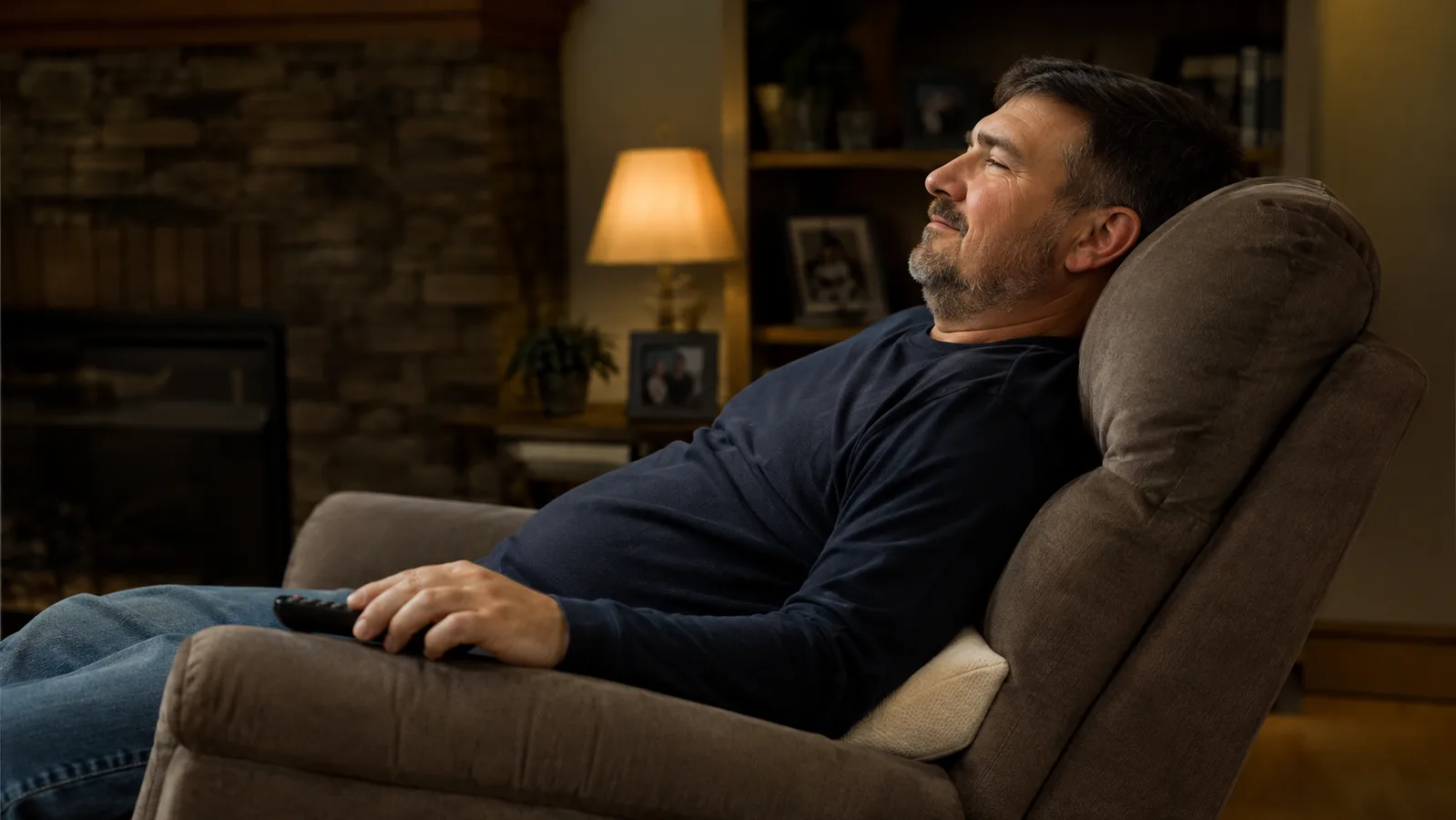
At home, in the recliner that never moves, the strap held its original position for months without needing an adjustment. That's the tell. If you're putting this in a car seat or a truck seat you get in and out of constantly, budget five minutes every couple of weeks to snug the strap back down. If it's going on a desk chair or a recliner that stays put, you likely won't think about the strap again after the first setup.
What Happens to the Foam After a Few Months
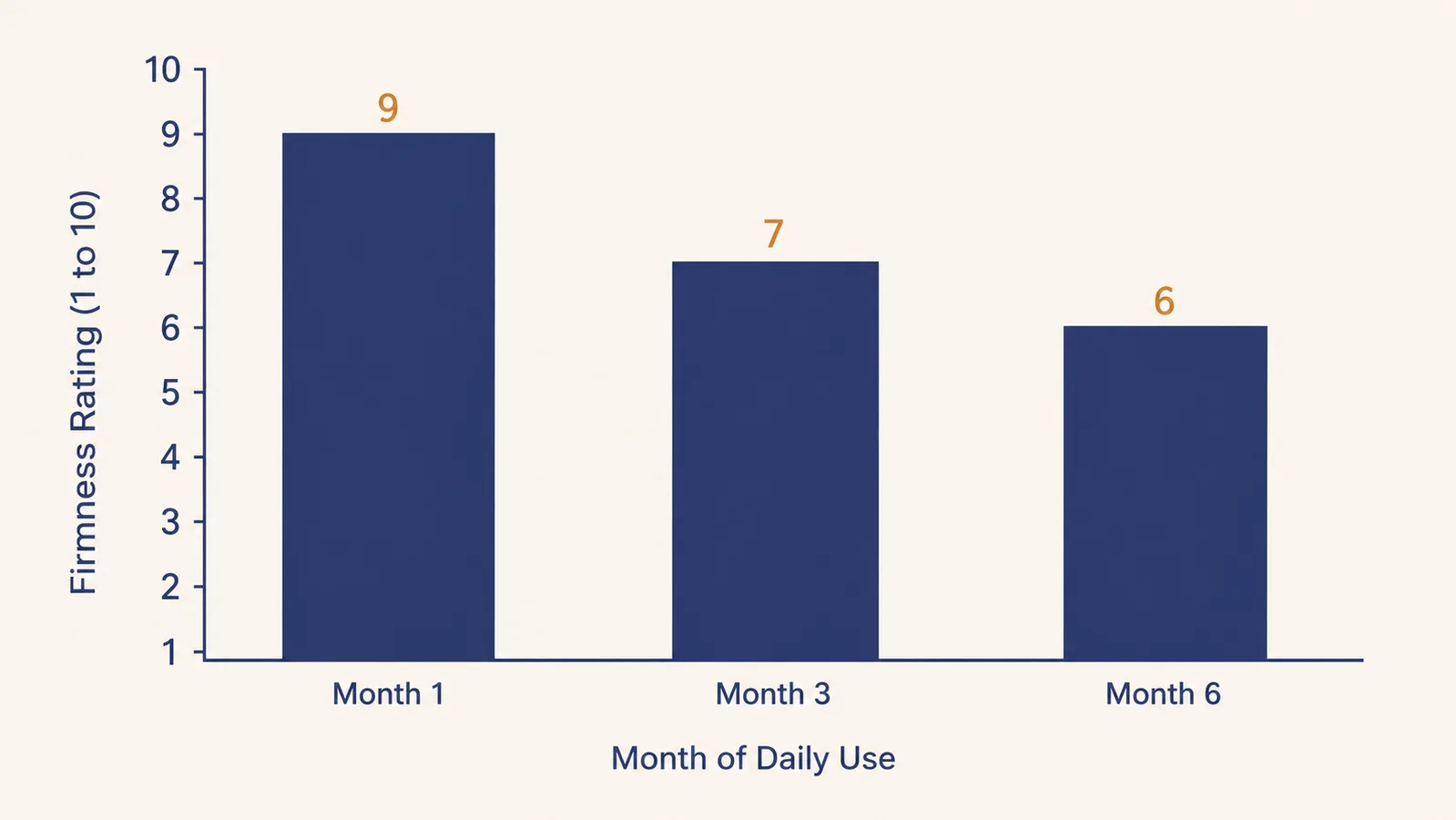
Memory foam breaks in the same way a new mattress does. Fresh out of the box, mine had a firmer, almost stiff push-back that took a few nights to soften into something that actually molded to my lower back instead of just pressing against it. That part is normal and expected. What surprised me was how much softer it got by month four, not in a good, broken-in way, but in a way where the curve that used to hold my lower spine started flattening out under sustained pressure during long stretches behind the wheel.
I did the same simple test every month, pressing my thumb into the center of the pillow and timing how long it took to spring back to its original shape. Week one, it was slow and stiff, closer to four or five seconds. By month four, it snapped back in under two seconds, which sounds like an improvement until you realize that's the foam losing density, not gaining responsiveness. A slower rebound early on isn't a flaw, it's just new foam. A fast, loose rebound four months in is the foam telling you it has less to give than it used to.
It's not falling apart. It still looks like a lumbar pillow and it still has shape when you pick it up off the seat. But under my actual body weight for eight, nine, ten hours a day, it compresses more by month four than it did in month one, and the support feels noticeably less firm by the end of a long shift than it does first thing in the morning. If firm, unchanging support is what you're after, know that this foam softens with heavy daily use. It doesn't stay showroom-firm forever.
It Doesn't Fit Every Seat Back
This is the one nobody selling the pillow will bring up. My Peterbilt has a tall, relatively flat cloth seat back, and the pillow's molded curve lines up with my spine without a fight. My brother-in-law tried the same pillow in his pickup's bucket seat, which has thick side bolsters and a shorter seat back, and the pillow's width didn't sit right between the bolsters. It kept getting squeezed at an angle instead of sitting flat against his lower back. My wife tried it on her mesh-back office chair and ran into a similar issue, since the mesh has too much give of its own, so the pillow shifts around rather than staying anchored the way it does on a firm cloth seat.
A buddy of mine who drives an older bench-seat rig ran into a different version of the same problem. A bench seat back is wider and flatter across the whole width, so the pillow's curve, sized for a single bucket-style seat, sat centered fine but left both edges of the seat back exposed and untouched, which meant less of the support he was hoping for spread across his whole lower back. None of this makes the pillow defective, it just means the shape was designed with one style of seat back in mind, and it shows the moment you put it somewhere different.
If your seat back is tall, flat, and made of solid cloth or leather, like most semi-truck seats and a lot of standard car seats, this pillow fits the way the photos promise. If you're working with heavily bolstered bucket seats, a mesh ergonomic office chair, a wide bench seat, or a seat back shorter than about sixteen inches, try it before you count on it solving your seating problem, because the fit is not universal.
Running Hot in Summer
Memory foam holds heat, that's just physics, and this pillow is no exception. In the winter, running the truck's heat or sitting in a cool house, I never noticed it. Come July, parked at a truck stop with the engine off and no shore power running the AC, the spot on my back where the pillow sits gets noticeably warmer and a little damp by the end of an hour, especially compared to the rest of my back against the plain cloth seat. The mesh cover helps some air move through, but it doesn't come close to canceling out what dense foam does in a hot cab.
At home, with central air running, I've never had the same complaint. This is really a road-and-summer problem more than a home problem. If you run a sleeper cab or a car without reliable AC through hot months, that's worth knowing going in, since a pillow that traps heat against your lower back for a ten-hour shift is a real, physical annoyance, not a minor quibble. A small clip-on fan aimed at the seat back helps some, but it doesn't erase the issue, it just makes it tolerable.
Alternatives I Considered
Before settling on this one, I looked at an inflatable lumbar support that lets you dial in firmness with a hand pump, and a couple of no-name foam pillows priced a bit cheaper. The inflatable held its shape better over time since there's no foam to compress, but it felt harder and less forgiving on long shifts, more like sitting against a football than a cushion. I go into a full side-by-side against a cheaper generic lumbar pillow in another piece, but the short version is that the Everlasting Comfort holds its curve and stitching better than the bargain option did after a similar stretch of daily use, even with the foam softening I mentioned above.
The generic pillows I tried were thinner from the start, so there was less foam to break down in the first place, but that also meant less support to lose. It's a real tradeoff, not a clear winner either direction. A thinner pillow degrades less because it had less cushioning to begin with, while this one starts out with more support and gives up more of it over time. Which one you'd rather have depends on whether you want a strong start that fades some, or a modest, steady baseline that barely changes.
None of the alternatives I tried solved the strap-loosening issue either, since that's more a function of how often the pillow gets handled than which brand made it. If you're buying for a seat you get in and out of constantly, expect to manage the strap no matter which lumbar pillow you pick.
What I Liked
- Molded memory foam curve holds the shape of a lower back well when the seat back is tall and firm
- Mesh cover breathes better than a solid fabric cover would, even if it's not enough on its own in summer heat
- Straps fit most standard car, truck, and office chair frames without extra hardware
- Stitching and outer shell held up over months of daily in-and-out handling without fraying
- Still a reasonable price for a memory foam pillow of this size and build quality
Where It Falls Short
- Elastic strap loses tension with repeated stretching and needs re-cinching every couple of weeks in a seat you get in and out of often
- Foam noticeably softens and compresses more by month four than it did the first week
- Doesn't sit flat in heavily bolstered bucket seats, wide bench seats, or mesh-back office chairs
- Runs warm against the lower back in a hot cab or car without reliable air conditioning
- First week has a stiffer, less molded feel before the foam breaks in
The foam that felt too firm in week one is the same foam that feels too soft by month four. Nobody selling this pillow is going to tell you that, but it's the truth of eight hours a day against it.
Who This Is For
This pillow makes sense for someone with a tall, solid seat back, whether that's a truck seat, a standard car seat, or a firm desk chair, who wants a molded shape to sit against for long stretches and doesn't mind re-cinching a strap every couple of weeks. It's also a reasonable pick for occasional use, a recliner at home, a passenger seat on long drives, or a desk chair you're not living in for ten hours straight, where the foam won't see enough sustained pressure to soften as fast as mine did in the truck.
Who Should Skip It
Skip this one if your seat has heavy side bolsters, a wide bench profile, a mesh back, or a seat back shorter than about sixteen inches, since the fit issues I ran into with my brother-in-law's truck and my wife's office chair aren't going away with a different strap adjustment. Skip it too if you run a hot cab or car through the summer without reliable air conditioning and heat retention against your lower back is going to bother you more than the support helps.
One more thing worth saying plainly. A lumbar pillow can change how you sit, it is not a treatment for a back problem. If your lower back pain is persistent, getting worse, or comes with numbness, tingling, or weakness in your legs, that's a conversation for a doctor, not a cushion, no matter how good the cushion is. I'm a truck driver telling you what held up in my seat, not a medical professional, and I'd rather say that outright than have anyone read more into this review than it can honestly offer.
Know the Real Timeline Before You Strap One In
Firm the first week, softer by month four, and a strap that needs occasional attention if it rides in a seat you get in and out of often. If that trade still works for your chair, here's where to check today's price.
Amazon Check Today's Price on Amazon →